عربي
عربي


Foot Pain That You Have "Always Had" Is Not Normal. Qatar's Marble Floors, Flat Sandals, and Extreme Heat Make It Significantly Worse.
Flat feet and foot pain are among the most common orthopaedic complaints in Qatar — and among the most undertreated. At American Hospital Clinics Doha, Dr. Kiwin Peer Mohammed Ebrahim provides specialist foot assessment, customised insole prescription, and minimally invasive intervention when conservative management is insufficient.
Why Qatar's Environment Makes Foot Pain Worse
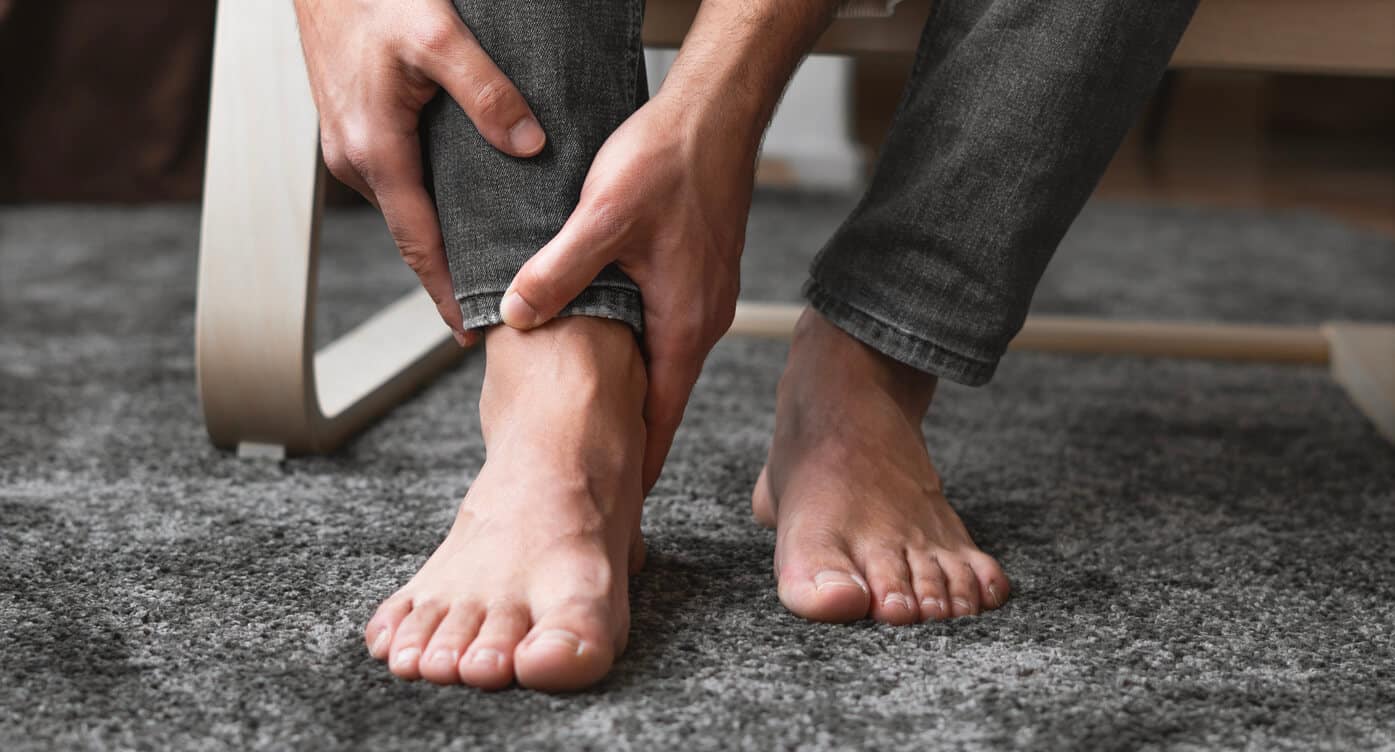
- Marble and tile flooring — Qatar's homes, malls, and offices are dominated by hard, non-absorptive flooring that transfers every step impact directly to the foot and ankle
- Flat sandals and flip-flops — the default informal footwear in Qatar provides no arch support, allowing the foot to pronate and flatten with every step
- Extreme heat — tissue inflammation is worsened by heat and dehydration; the plantar fascia becomes more prone to microtearing
- BMI — Qatar's high obesity rates create significant additional loading on the foot arch with every step
- Sedentary then suddenly active patterns — the transition from air-conditioned inactivity to weekend sport creates recurring soft tissue injuries
Common Foot and Ankle Conditions Treated at American Hospital Clinics Doha
1. Flat Feet (Pes Planus)
Flat feet — where the arch collapses so the entire sole contacts the floor — can be flexible or rigid. Flexible flat feet are common and often asymptomatic in childhood but can cause pain in adults, particularly with increasing body weight or high activity.
2. Plantar Fasciitis
The most common cause of heel pain — inflammation of the plantar fascia, the thick connective band running from heel to toes. Classic presentation: severe pain on taking the first steps in the morning that partially improves with movement, then worsens after prolonged standing.
3. Posterior Tibial Tendon Dysfunction (PTTD)
Progressive failure of the tendon that supports the arch. Causes progressive flat foot deformity in adults. Pain and swelling on the inner ankle and arch, worse with walking and standing. Early intervention prevents the need for surgery.
4. Achilles Tendinopathy
Degeneration of the Achilles tendon causing pain and stiffness at the back of the heel. Particularly common in middle-aged recreational athletes and in those who suddenly increase activity levels.
When Does Foot Pain Need Orthopaedic Intervention?
Not all flat feet or foot pain needs intervention. Conservative management is always first. Orthopaedic assessment is indicated when:
- Pain persists for more than 6 weeks despite rest, appropriate footwear, and stretching
- Foot pain is affecting your ability to work, sleep, or carry out daily activities
- The arch deformity is progressing over time
- Pain is affecting the knee, hip, or lower back as a consequence of altered gait
- A "bump" or swelling has developed at the heel, inner ankle, or base of the fifth toe
Treatment Options at American Hospital Clinics Doha
1. Custom Orthotic Insoles
Prescription orthotics — individually crafted to your foot's specific arch profile and pressure pattern — are the most effective non-surgical intervention for flat feet and plantar fasciitis. Far superior to over-the-counter arch supports.
2. Physiotherapy and Stretching Programme
Targeted calf stretching, plantar fascia stretching, and intrinsic foot muscle strengthening reduce pain and prevent progression. Provided with a structured home exercise programme.
3. Shockwave Therapy
For chronic plantar fasciitis that has not responded to conservative measures, extracorporeal shockwave therapy delivers focused energy to the affected tissue, promoting healing. Non-invasive, outpatient procedure.
4. Corticosteroid Injection
For severe, acute plantar fasciitis or refractory soft tissue pain — ultrasound-guided injection provides targeted anti-inflammatory treatment. Limited to 1 to 2 injections given the risk of plantar fascia rupture with repeated use.
5. Surgical Intervention
Reserved for cases that have failed all conservative measures. Minimally invasive endoscopic plantar fascia release or tendon reconstruction for PTTD are performed as day cases.
"Foot pain that you have had for years is not something you simply accept. In Qatar, the combination of hard flooring, flat footwear, heat-related inflammation, and excess body weight creates ideal conditions for chronic foot problems. But with the right assessment and targeted intervention, most patients achieve excellent pain relief without surgery." — Dr. Kiwin Peer Mohammed Ebrahim, Orthopaedics, AHC Doha