عربي
عربي


Kidney Stones: Causes, Symptoms, Treatment, and How to Prevent Recurrence
If you’ve ever had a kidney stone, you already know how sudden and intense the pain can be. If you haven’t, it’s worth knowing that Qatar’s heat and easy dehydration make kidney stones one of the more common urology concerns in the country.
Whether you’re dealing with your first stone, trying to understand a family history of them, or wanting to avoid a repeat episode, this guide covers what you need to know in plain language, from why they form to how they’re prevented.
Kidney stones affect people of all ages, but certain habits and conditions common to life in Qatar make them especially worth understanding, whether you’ve had one before or simply want to lower your risk. At American Hospital Clinics Doha, our experienced urology team provides comprehensive evaluation, diagnosis, and treatment for kidney stones, along with personalized guidance to help reduce the risk of recurrence. American Hospital Clinics Doha is committed to helping patients manage kidney stone disease with timely, evidence-based care.
Book a Urology Consultation
At American Hospital Clinics Doha today.
Quick Answer
Kidney stones form when minerals and salts in urine crystallise into hard deposits, often due to dehydration, diet, or an underlying health condition. Common symptoms include sudden, sharp back or side pain, blood in urine, and nausea. Staying well hydrated, adjusting your diet, and getting evaluated if stones keep coming back can significantly lower your risk.
Key Takeaways
- Qatar’s climate and low fluid intake are major risk factors for kidney stones
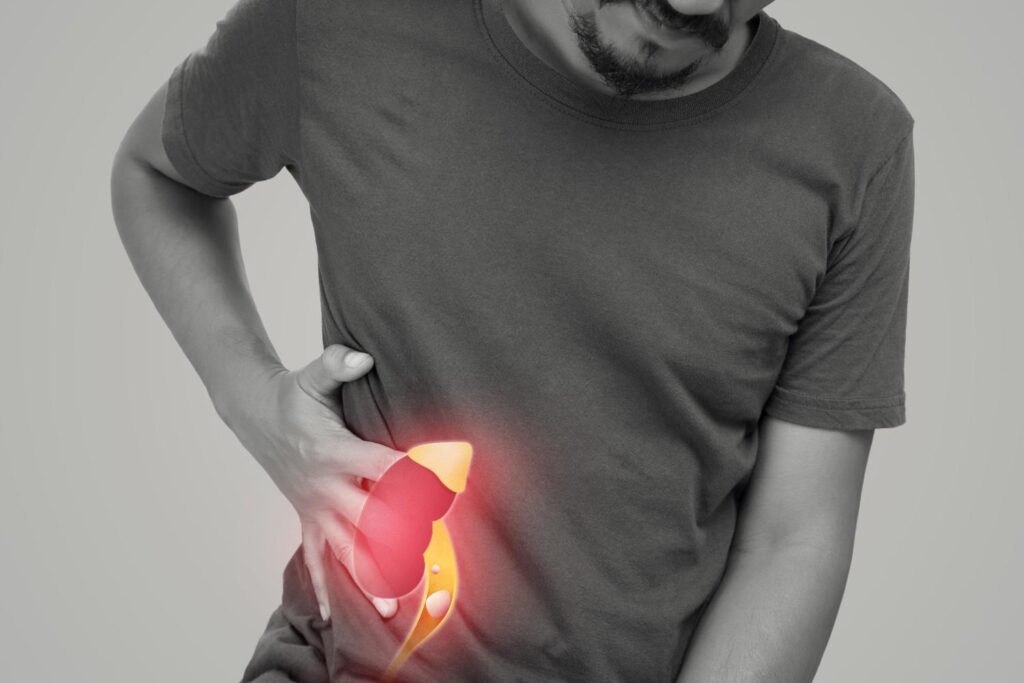
- Sudden, severe pain in the back or side is the most common warning sign
- Not all stones form for the same reason, diet and underlying health both play a role
- Many small stones pass naturally with proper monitoring and care
- Left unmanaged, kidney stones can lead to infection or damage the kidney over time
- Once the cause is identified, recurrence can often be prevented
- Roughly half of people who’ve had one kidney stone will experience another within several years without preventive steps
What Are Kidney Stones?
A kidney stone is a hard deposit made of minerals and salts that forms inside the kidney when urine becomes too concentrated. Stones can be as small as a grain of sand or, less commonly, much larger. Small stones may pass unnoticed, while larger ones can cause significant pain as they move through the urinary tract.
There are several different types of kidney stones, and the type you form often depends on your diet, hydration habits, and sometimes your genetics. Knowing which type you’ve had, if you’ve had one before, is an important part of preventing the next one.
Why Kidney Stones Are So Common in Qatar
High temperatures for much of the year mean the body loses fluid quickly through sweat, and it’s easy to fall behind on water intake without realising it. Combined with diets that can be high in salt and animal protein, and a largely indoor, less active lifestyle, these factors together raise the risk of stone formation in the region.
Outdoor workers and anyone spending significant time outside during summer months are at particularly high risk, since fluid loss can happen faster than thirst signals it. Air conditioning, while it makes the heat bearable, can also mask how much fluid the body is actually losing.
Common Symptoms
- A sudden, sharp pain in the back or side, often radiating toward the lower abdomen or groin
- Pain that comes in waves and changes intensity
- Blood in the urine (pink, red, or brown in colour)
- Nausea or vomiting
- A frequent or urgent need to urinate
- Fever or chills, which can signal an infection
- Cloudy or foul-smelling urine
Book your appointment
Limited slots available this month — Reserve yours now
Book a Urology Consultation at American Hospital Clinics Doha
What Causes Kidney Stones
- Not drinking enough water, especially in hot weather
- A diet high in salt, sugar, or animal protein
- A family history of kidney stones
- Certain underlying conditions, such as obesity or metabolic disorders
- Some medications and supplements
- Digestive conditions that affect how the body absorbs calcium and other minerals
How Kidney Stones Are Diagnosed
A doctor will typically start by discussing your symptoms and medical history, followed by imaging to confirm the presence, size, and location of a stone. Urine and blood tests are often used alongside imaging to understand what type of stone you’re dealing with and whether an underlying condition is contributing to it.
This full picture matters because treatment and prevention strategies differ depending on the stone type, so an accurate diagnosis is the foundation for everything that follows.
When to See a Doctor
Sudden, severe pain that doesn’t ease up, pain accompanied by fever, visible blood in your urine, or difficulty urinating are all reasons to seek medical care promptly rather than waiting it out at home. Fever alongside flank pain, in particular, can indicate an infection that needs urgent attention. At American Hospital Clinics Doha, our urology team provides prompt evaluation and treatment for kidney stone emergencies to help relieve pain and prevent complications.
Preventing Recurrence
If you’ve had a kidney stone before, you’re more likely to get another one. The good news is that once a doctor identifies what type of stone you formed and why, targeted prevention, built around hydration, diet adjustments, and in some cases regular monitoring, can meaningfully lower the chances of it happening again.
Simple habits like carrying a water bottle throughout the day, moderating salt intake, and staying mindful of hydration during outdoor activities or exercise can make a real difference over time, especially living in a hot climate like Qatar’s.
Living With a History of Kidney Stones
If stones run in your family or you’ve already had more than one, it’s worth building hydration and dietary awareness into your daily routine rather than only thinking about it when pain strikes. Many patients find it useful to build steady water-drinking habits into their day, especially during travel or intense summer heat, when routines can slip without anyone noticing.
Regular follow-up with a urologist, even when you’re feeling completely well, allows small changes in risk to be caught early through simple urine and blood tests, long before they turn into another painful episode.
Common Misconceptions About Kidney Stones
- “Only older adults get kidney stones” — in reality, they’re increasingly common in younger adults too
- “If I’m not in pain, I don’t have a stone” — small stones can sit silently for a long time before causing symptoms
- “Kidney stones always need surgery” — many pass naturally with monitoring and supportive care
- “Once treated, I’m in the clear for good” — without addressing the underlying cause, recurrence is common
How American Hospital Clinics Doha’s Urology Department Can Help
At American Hospital Clinics Doha, our Urology Department supports patients through every stage of kidney stone care, from a first episode to long-term prevention.
- Advanced Diagnostic Imaging: To accurately locate and assess kidney stones.
- Comprehensive Evaluation: To identify the underlying cause of stone formation.
- Personalized Prevention Plans: Tailored to your stone type, lifestyle, and medical history.
- Emergency Urology Support: Prompt care for sudden, severe kidney stone episodes.
- Ongoing Monitoring: Regular follow-up for patients with a history of recurring stones.
- Insurance Support: Assistance with pre-authorisation and claims processing where applicable.
At American Hospital Clinics Doha, our experienced urology team is committed to providing timely diagnosis, effective treatment, and long-term support to help reduce the risk of future kidney stones.
Frequently Asked Questions
Is bad breath always caused by poor hygiene?
Why is my breath worse in the morning?
Can drinking more water really help with bad breath?
Does bad breath mean I have gum disease?
Is mouthwash a good long-term solution?
Can certain foods cause long-lasting bad breath?
When should I actually worry about bad breath?
Does Qatar's climate make bad breath more likely?
Will a professional cleaning help with bad breath?
Conclusion
Persistent bad breath isn’t something you simply have to live with or mask indefinitely. In most cases, there’s a clear, treatable cause behind it, and addressing that cause directly gets far better, longer-lasting results than mints or mouthwash ever will. At American Hospital Clinics Doha, our dental team helps identify the underlying cause of bad breath and provides personalized treatment to restore fresh breath and improve your oral health.
BOOK YOUR UROLOGY CONSULTATION NOW
Find relief from kidney stones with expert care.
C Ring Road,Al Muntazah St Near Al Andalus Petrol Station, Doha, Qatar