عربي
عربي


A sudden, sharp pain in the upper right abdomen after a heavy or fatty meal is one of the most classic signs of gallstones, but far from the only way this common condition can show up. For many people, gallstones cause no symptoms at all and are discovered by chance during an unrelated scan.
For others, they bring on episodes of significant pain that can seem to come out of nowhere, often after a particular type of meal, leaving people unsure of what’s actually happening or how urgent it is.
Gallstones are one of the most common digestive conditions seen by general surgeons, and understanding the difference between a silent stone and one that needs treatment can save a lot of unnecessary worry, or catch a developing complication in time.
This guide explains what gallstones are, what causes them, the symptoms to watch for, and the range of treatment options available.
Book a General Surgery Consultation
At American Hospital Clinics Doha today.
Quick Answer
Gallstones are hardened deposits that form in the gallbladder and can range from silent and harmless to causing sudden, severe abdominal pain, especially after fatty meals. While small, symptom-free stones may simply be monitored, larger or symptomatic stones often require treatment to prevent complications.
Key Takeaways
- Many people have gallstones without ever knowing it
- Pain after fatty or heavy meals is a classic warning sign
- Gallstones can lead to serious complications if left untreated once symptomatic
- Women, and those with obesity, rapid weight loss, or a family history, are at higher risk
- Not all gallstones need immediate treatment
- Diagnosis is usually straightforward with an ultrasound
- Diet alone rarely resolves symptomatic gallstones
What Are Gallstones
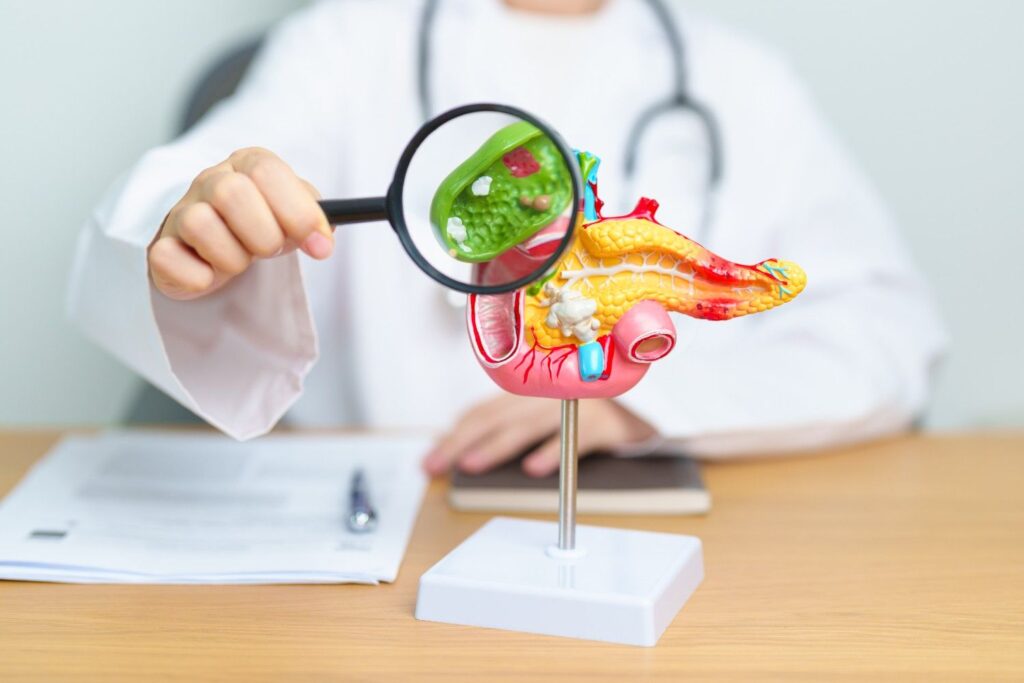
Gallstones are hardened deposits that form inside the gallbladder, a small organ that stores bile used to help digest fat. They can range in size from a grain of sand to a golf ball, and a person can have just one or many at once. Most gallstones form from excess cholesterol or bilirubin in the bile crystallising over time.
What Causes Gallstones
- Excess cholesterol in the bile, which can crystallise into stones
- Excess bilirubin, a substance produced during the normal breakdown of red blood cells
- Insufficient or infrequent gallbladder emptying
- A genetic predisposition, gallstones can run in families
- Rapid weight loss, which can temporarily increase cholesterol concentration in bile
- Obesity, a well-established risk factor
- Pregnancy, due to hormonal changes affecting bile composition
- Certain medications, including some hormone-based treatments
Who’s Most at Risk
- Women, particularly during and after pregnancy
- Adults over 40
- Those with a family history of gallstones
- People with obesity or a sedentary lifestyle
- Those who have recently undergone rapid weight loss
- Certain ethnic backgrounds carry a higher genetic predisposition
Book your appointment
Limited slots available this month — Reserve yours now
Book a General Surgery Consultation at American Hospital Qatar — No Referral Needed
Common Symptoms
- Sudden, intense pain in the upper right or center of the abdomen
- Pain that often follows a fatty or heavy meal
- Pain that may radiate to the back or right shoulder blade
- Nausea or vomiting during an episode
- Bloating or general indigestion
When Gallstones Become an Emergency
- Fever accompanying abdominal pain
- Persistent, severe pain that doesn’t ease
- Yellowing of the skin or eyes (jaundice)
- Signs of infection, such as chills or a rapid heartbeat alongside pain
How Gallstones Are Diagnosed
An abdominal ultrasound is typically the first and most effective way to detect gallstones, offering a clear, painless view of the gallbladder. Blood tests may be used to check for signs of infection or blockage, and in some cases, additional imaging is used to get a fuller picture before deciding on next steps.
Treatment Options
Small, symptom-free gallstones discovered incidentally are often simply monitored, since many never cause problems. For gallstones causing recurring pain or complications, surgical removal of the gallbladder is generally the most effective and commonly recommended treatment, as the body functions well without it. Dietary adjustments can help manage mild symptoms but rarely resolve symptomatic gallstones on their own.
Life After Gallbladder Removal
Most people adjust well after gallbladder removal and go on to eat a normal diet without significant restrictions. Some people notice mild digestive changes, particularly with very fatty meals, in the weeks following surgery, which typically settle as the body adapts to processing bile without the gallbladder’s storage function.
Gallstones vs Other Causes of Abdominal Pain
Gastritis or Acid Reflux
Often causes burning discomfort in the upper abdomen or chest, typically unrelated to fatty foods specifically and more associated with spicy or acidic foods.
Appendicitis
Usually presents as pain starting near the belly button and moving to the lower right abdomen, often with fever, distinct from the upper right, meal-related pattern of gallstones.
Kidney Stones
Typically causes pain in the back or side that can radiate to the groin, differing from the upper abdominal, meal-triggered pattern typical of gallstones.
Can Gallstones Be Prevented
- Maintain a healthy, gradual approach to weight management rather than rapid weight loss
- Eat regular meals rather than skipping them, which supports normal gallbladder emptying
- Include fiber-rich foods and healthy fats in moderation as part of a balanced diet
- Stay physically active
- Be aware of your family history and mention it to your doctor
How American Hospital Qatar’s General Surgery Department Can Help
Our General Surgery Department offers thorough evaluation and a full range of treatment options for gallstones and related conditions.
- Experienced General Surgeons: specialists in diagnosing and treating gallbladder conditions
- On-Site Ultrasound and Imaging: fast, accurate diagnosis
- Minimally Invasive Surgical Options: where appropriate, for a smoother recovery
- Personalized Treatment Planning: guidance suited to your specific case and symptoms
- Insurance Accepted: our team assists with pre-authorisation and claims
Frequently Asked Questions
Can gallstones go away on their own?
Is gallbladder removal a major surgery?
Can I live normally without a gallbladder?
What foods should I avoid with gallstones?
Are gallstones more common in women?
Can gallstones cause pancreatitis?
Conclusion
Gallstones are common, and for many people, entirely silent. The key is recognising when symptoms point to something that needs attention, particularly sudden pain after meals or any signs of a more serious complication.
Whether your case calls for simple monitoring or treatment, a proper evaluation gives you clarity and a plan, rather than uncertainty about what’s causing your symptoms.
BOOK YOUR GENERAL SURGERY CONSULTATION NOW
Manage gallbladder stones with trusted surgical care
C Ring Road,Al Muntazah St Near Al Andalus Petrol Station, Doha, Qatar