عربي
عربي


Snoring is often treated as a running joke, a mild annoyance for whoever shares the bedroom, and rarely something either person thinks to raise with a doctor. For many people, that’s a fair assessment, occasional or mild snoring usually isn’t a medical concern.
But for others, snoring is a visible clue to something happening beneath the surface: obstructive sleep apnea, a condition where breathing repeatedly stops and starts throughout the night, often without the person having any memory of it happening.
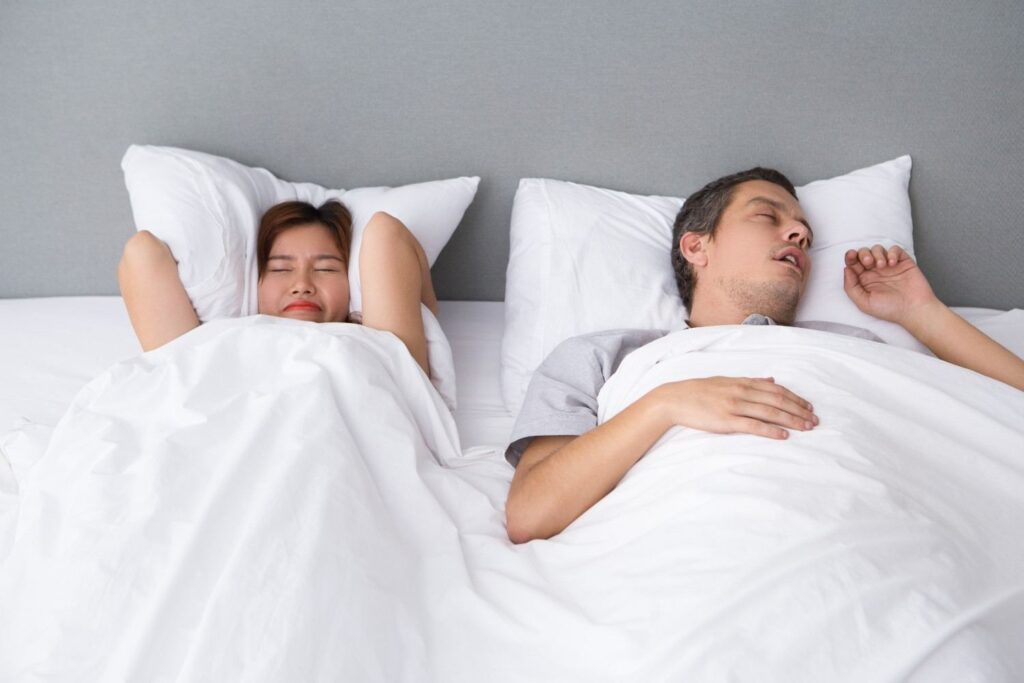
The tricky part is that the person snoring is rarely the one who notices the warning signs first. It’s usually a partner who hears the pauses, the gasping, or the restless tossing that hints something isn’t quite right about how the person is sleeping.
Left unaddressed, sleep apnea does more than disrupt sleep quality, it’s linked to a range of other health concerns that make it worth taking seriously rather than dismissing as “just snoring.”
This guide explains the difference between ordinary snoring and sleep apnea, the warning signs to watch for, and the treatment options available once it’s properly diagnosed.
Book an ENT Consultation
At American Hospital Clinics Doha today.
Quick Answer
Occasional snoring is common and usually harmless, but loud, frequent snoring accompanied by gasping, choking, or daytime fatigue can be a sign of obstructive sleep apnea, a condition where breathing repeatedly stops and starts during sleep. Left untreated, sleep apnea can affect heart health, energy levels, and overall quality of life, but it’s very treatable once diagnosed.
Key Takeaways
- Not all snoring is a medical concern, but certain patterns are worth investigating
- Obstructive sleep apnea involves repeated pauses in breathing during sleep
- Daytime fatigue despite a full night’s sleep is a common warning sign
- Untreated sleep apnea is linked to heart, blood pressure, and metabolic issues
- A sleep study is the standard way to diagnose sleep apnea accurately
- Treatment ranges from lifestyle changes to CPAP therapy or other targeted options
- Partners often notice the warning signs before the person snoring does
Why Snoring Happens
Snoring occurs when airflow through the nose and throat is partially blocked during sleep, causing surrounding tissues to vibrate. This can happen for many reasons, relaxed throat muscles, nasal congestion, sleeping position, weight, or alcohol consumption, and in many cases it’s occasional and not indicative of a deeper issue.
Snoring vs Sleep Apnea: What’s the Difference
Simple snoring is a sound, an audible sign of airflow turbulence, without necessarily affecting breathing itself. Obstructive sleep apnea goes further: the airway becomes fully or partially blocked, actually interrupting breathing for seconds at a time, sometimes dozens or hundreds of times a night. These interruptions repeatedly disturb sleep, even if the person doesn’t fully wake up or remember it happening.
Common Signs of Obstructive Sleep Apnea
- Loud, frequent snoring with noticeable pauses in breathing
- Gasping or choking sounds during sleep
- Waking up with headaches, particularly in the morning
- Excessive daytime sleepiness despite a full night in bed
- Difficulty concentrating or noticeable memory lapses
- Irritability or mood changes linked to poor sleep quality
Who’s at Higher Risk
- People who are overweight, particularly with excess weight around the neck
- Those with a naturally narrower airway or certain jaw or nasal structures
- A family history of sleep apnea
- Smokers and regular alcohol users
- Men, and women after menopause, though it can affect anyone
- Older adults, as risk generally increases with age
Book your appointment
Limited slots available this month — Reserve yours now
Book an ENT Consultation
Why Sleep Apnea Shouldn’t Be Ignored
Beyond disrupted sleep and daytime fatigue, untreated sleep apnea is associated with an increased risk of high blood pressure, heart disease, irregular heart rhythms, and metabolic issues like insulin resistance. The repeated drops in oxygen levels during sleep place ongoing strain on the cardiovascular system, which is why sleep apnea is considered a genuine health concern rather than simply an inconvenience.
Daytime fatigue from poor sleep quality also has practical, immediate risks, including reduced concentration that can affect driving safety and work performance.
How Sleep Apnea Is Diagnosed
A sleep study is the standard way to confirm sleep apnea, monitoring breathing patterns, oxygen levels, and other indicators overnight. This can be done in a sleep lab or, in many cases, with a home-based monitoring device, depending on your specific situation and what your doctor recommends.
Treatment Options
- Lifestyle changes: weight management, reducing alcohol intake, and adjusting sleep position can meaningfully help mild cases
- CPAP therapy: a machine that delivers steady air pressure through a mask to keep the airway open during sleep, the most common and effective treatment for moderate to severe cases
- Oral appliances: custom-fitted devices that reposition the jaw to help keep the airway open, suitable for certain cases
- Surgical options: considered in select cases where structural issues are contributing significantly to the obstruction
Tips for Partners and Family Members
If you’ve noticed a partner or family member snoring loudly, pausing in their breathing, or seeming excessively tired despite a full night’s sleep, it’s worth gently raising the topic. Because the person experiencing sleep apnea often has no memory of the nighttime disruptions, an observant partner is frequently the reason someone seeks evaluation in the first place, and that observation can make a meaningful difference to their long-term health.
Sleep Apnea in Children
While often thought of as an adult condition, sleep apnea can affect children too, frequently linked to enlarged tonsils or adenoids rather than weight or airway structure. Signs in children can look different from adults, including bedwetting, hyperactivity, or difficulty concentrating at school, rather than the classic daytime sleepiness seen in adults. If a child snores loudly or seems to struggle with breathing during sleep, it’s worth having evaluated.
Living Well With Treated Sleep Apnea
Most people who begin appropriate treatment notice a significant improvement in energy, mood, and overall quality of life within a relatively short time. Adjusting to a new treatment, particularly CPAP therapy, can take a short period of getting used to, but most patients find the improvement in daytime alertness and sleep quality well worth the adjustment period.
Sleep Apnea and Qatar’s Lifestyle Factors
Long working hours, late nights, and a culture that sometimes treats sleep as optional rather than essential can all make it harder to notice sleep apnea amid a generally busy lifestyle. Heat also plays a role indirectly, warmer climates can encourage later bedtimes and more time spent indoors, sometimes at the expense of the consistent sleep schedule that supports healthy breathing patterns overnight.
Recognising these lifestyle patterns is a useful first step, since addressing them alongside any medical treatment tends to produce the best overall results for sleep quality and daytime energy.
What a Typical Diagnosis and Treatment Journey Looks Like
Initial Consultation
Your ENT specialist reviews your symptoms, sleep history, and any observations from a partner or family member, along with a physical examination of your airway.
Sleep Study
Based on the initial assessment, a sleep study, whether lab-based or home-based, confirms whether sleep apnea is present and how severe it is.
Personalized Treatment
Results guide a tailored plan, whether that’s lifestyle changes, CPAP therapy, an oral appliance, or in select cases, a surgical option, with follow-up to confirm the treatment is working well.
How American Hospital Qatar’s ENT Department Can Help
Our ENT Department offers thorough evaluation and a full range of treatment options for snoring and sleep apnea.
- Experienced ENT Specialists: assessment of airway structure and sleep-related breathing concerns
- Sleep Study Coordination: guidance on the right type of sleep study for your situation
- Personalized Treatment Plans: from lifestyle guidance to CPAP fitting or surgical evaluation
- Ongoing Follow-Up: ensuring your treatment continues to work effectively over time
- Insurance Accepted: our team assists with pre-authorisation and claims
Frequently Asked Questions
Is all snoring a sign of sleep apnea?
Can losing weight reduce snoring?
Is a sleep study uncomfortable?
Can children have sleep apnea?
Is CPAP the only treatment option?
How do I know if I should get evaluated?
Conclusion
Snoring might be an easy thing to joke about, but persistent, loud snoring paired with other warning signs deserves a proper look rather than being brushed aside. Sleep apnea is a genuine health condition with real consequences, but it’s also very treatable once identified.
Getting evaluated doesn’t just improve your nights, it can meaningfully protect your long-term heart and metabolic health, alongside restoring the kind of daytime energy that’s easy to forget is possible.
If a partner has raised concerns about your sleep, or you recognise these signs in yourself, an ENT evaluation offers a clear path toward better sleep and better long-term health.
Book an ENT Consultation Now
Understand your snoring and protect your sleep health.
C Ring Road,Al Muntazah St Near Al Andalus Petrol Station, Doha, Qatar