عربي
عربي


Reaching for a cotton swab after a shower is such an automatic habit for many people that it rarely gets a second thought. Yet this small daily ritual is one of the most common reasons people end up with ear problems that could otherwise have been avoided entirely.
Earwax has a bit of an image problem. It’s often seen as something dirty that needs to be cleaned out regularly, when in reality it’s a normal, protective substance that the ear is generally very good at managing on its own.
The confusion isn’t entirely misplaced, earwax buildup is a real and sometimes uncomfortable problem. The issue is less about whether earwax matters, and more about how people go about dealing with it, often in ways that make the problem worse rather than better.
Understanding what earwax actually does, why common cleaning habits can backfire, and what safe ear care actually looks like can save you from a surprisingly common category of avoidable ENT visits.
This guide explains the purpose of earwax, the risks of popular at-home cleaning methods, the signs of a genuine blockage, and when it’s time to see a specialist.
Book an ENT Consultation
At American Hospital Clinics Doha today.
Quick Answer
Earwax (cerumen) is a natural, protective substance that usually clears itself without intervention. Common at-home cleaning methods, especially cotton swabs, often push wax deeper or cause injury rather than helping. Safe ear care mostly means leaving ears alone, with professional cleaning reserved for actual blockages.
Key Takeaways
- Earwax serves a protective function and usually doesn’t need to be actively removed
- Cotton swabs often push wax deeper into the ear canal rather than removing it
- Excessive cleaning can cause irritation, injury, or infection
- Impacted earwax can cause hearing loss, discomfort, or ringing in the ears
- Certain groups, like hearing aid users, are more prone to earwax buildup
- Professional ear cleaning is safe, quick, and effective when genuinely needed
- Warning signs like pain, drainage, or sudden hearing changes need prompt evaluation
What Earwax Actually Does
Earwax, medically known as cerumen, is produced by glands in the outer ear canal and serves several protective functions: trapping dust and debris, lubricating the ear canal, and even providing some natural antibacterial properties. Rather than being a sign of poor hygiene, its presence is a normal, healthy part of how the ear protects itself.
Why the Ear Usually Cleans Itself
The ear canal has a natural, gradual migration process, older earwax, along with trapped debris, slowly moves outward over time, aided by jaw movement from talking and chewing, eventually reaching the outer ear where it naturally flakes away or is washed off during regular bathing. For most people, this self-cleaning process is entirely sufficient without any additional intervention.
The Trouble With Cotton Swabs and Other At-Home Tools
Cotton swabs, bobby pins, and similar objects are narrow enough to fit into the ear canal, but this is precisely the problem. Rather than removing wax, these tools often push it further inward, compacting it against the eardrum and increasing the risk of a blockage. They can also scratch the delicate skin of the ear canal, increasing infection risk, or in more serious cases, injure the eardrum itself.
Signs of Earwax Buildup or Impaction
- A feeling of fullness or pressure in the ear
- Muffled or reduced hearing
- Ringing or buzzing in the ear (tinnitus)
- Mild dizziness in some cases
- Itching or discomfort in the ear canal
- Ear pain, particularly if the blockage is significant
Who’s More Prone to Earwax Buildup
- People who regularly use hearing aids or earbuds, which can push wax inward and interfere with natural migration
- Older adults, whose earwax can become drier and more prone to impaction
- Those with naturally narrow or curved ear canals
- People who frequently use cotton swabs, ironically increasing their own risk of impaction
Safe At-Home Ear Care
- Clean only the outer ear with a soft washcloth during bathing
- Avoid inserting cotton swabs, bobby pins, or any object into the ear canal
- Use over-the-counter ear drops only if recommended by a doctor for your specific situation
- Keep ears dry after swimming or bathing to reduce infection risk
- Resist the urge to “dig” if an ear feels itchy or full, this often makes things worse
When to See an ENT Specialist
- Persistent fullness or hearing changes that don’t resolve on their own
- Ear pain, especially if it’s worsening
- Drainage or discharge from the ear
- Sudden or significant hearing loss
- Dizziness accompanying ear symptoms
- A known history of impacted earwax that keeps recurring
Book your appointment
Limited slots available this month — Reserve yours now
Book an ENT Consultation
How Professional Ear Cleaning Works
When earwax removal is genuinely needed, an ENT specialist has several safe, effective methods available, including gentle irrigation, suction, or manual removal using specialised, purpose-built instruments under direct visualisation. These methods are far safer and more effective than at-home attempts, precisely because they’re performed with proper tools and training, allowing the wax to be cleared without pushing it deeper or risking injury.
Special Considerations for Hearing Aid and Earbud Users
People who wear hearing aids or use earbuds frequently face a somewhat higher risk of earwax buildup, since these devices can interfere with the ear’s natural wax migration and sometimes push wax further inward. Regular check-ins with an ENT specialist, alongside proper device hygiene, can help this group stay ahead of buildup before it becomes uncomfortable or affects device performance.
What Happens During a Professional Cleaning Visit
Examination First
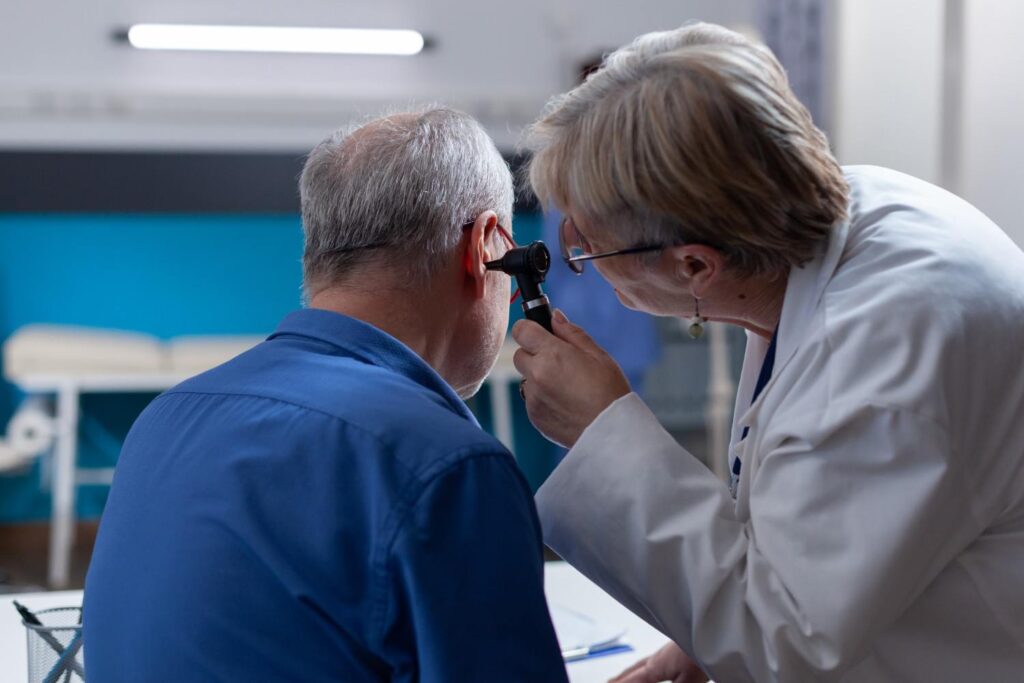
Your ENT specialist examines the ear canal using proper lighting and magnification to assess the extent and location of any buildup before choosing a removal method.
Gentle Removal
Depending on findings, irrigation, suction, or manual instruments are used, whichever is safest and most comfortable for your specific ear anatomy and wax consistency.
Follow-Up Guidance
You’ll receive tailored advice on how to prevent future buildup and, if relevant, a suggested timeline for any follow-up checks.
Common Myths About Ear Cleaning
- “Ear candling safely removes wax”: this method is not supported by evidence and carries real risks of burns and injury
- “Clean ears mean no visible wax at all”: some wax is normal and healthy; the goal isn’t a completely wax-free ear canal
- “If it feels itchy, I should clean it more”: itching is often a sign of irritation from over-cleaning, not a sign more cleaning is needed
Breaking the Habit of Everyday Cotton Swab Use
For many people, using cotton swabs is less a deliberate cleaning choice and more an ingrained daily habit, often picked up in childhood and never questioned since. Recognising this pattern is often the first step toward change, replacing the swab-after-shower routine with simply drying the outer ear with a towel achieves the same sense of freshness without the associated risks.
If the habit feels hard to break, keeping cotton swabs out of the bathroom entirely, or replacing them with a soft towel within easy reach, can help remove the temptation altogether.
How American Hospital Qatar’s ENT Department Can Help
Our ENT Department provides safe, professional earwax removal and evaluation for a range of ear-related concerns.
- Experienced ENT Specialists: safe, effective earwax removal using proper clinical tools
- Thorough Ear Examination: identifying the true cause of any ear discomfort or hearing change
- Gentle, Evidence-Based Techniques: irrigation, suction, or manual removal as appropriate
- Guidance on Safe Home Care: practical advice to prevent future buildup or injury
- Insurance Accepted: our team assists with pre-authorisation and claims
Frequently Asked Questions
Is it normal to have earwax?
Are ear candles safe?
Can earwax buildup cause permanent hearing loss?
How often should ears be professionally cleaned?
Can children have earwax removed at home?
What should I do if my ear feels blocked?
Conclusion
The best thing most people can do for their ears is also the simplest: leave them alone. Earwax is doing its job, and the instinct to clean it out proactively often causes more harm than the wax itself ever would.
When buildup or discomfort does become a genuine problem, professional removal is quick, safe, and far more effective than any at-home method, without the risks that come with cotton swabs or other makeshift tools.
Breaking a long-held habit takes a little conscious effort at first, but your ears, and your hearing, are well worth that small adjustment.
If your ears feel blocked, itchy, or uncomfortable, skip the cotton swab and book an evaluation instead. It’s a simple step that protects your hearing for the long run.
Book an ENT Consultation Now
Keep your ears clean with safe, expert care.
C Ring Road,Al Muntazah St Near Al Andalus Petrol Station, Doha, Qatar