


 عربي


Your child’s skin is thinner, more sensitive and loses moisture faster than yours. In Qatar, where children move between intense heat, sweat, chlorinated pools, sandy beaches and cold air conditioning every day, even healthy skin can be tested. Most childhood skin problems are harmless and settle with simple care, but some need a specialist. Here is how to tell the difference.
Book a Dermatology Consultation
At American Hospital Clinics Doha today.
Why children’s skin needs special care
A child’s skin barrier is still developing, so it absorbs substances more easily and reacts faster to irritants. Gentle, fragrance-free products and a consistent routine make a big difference.
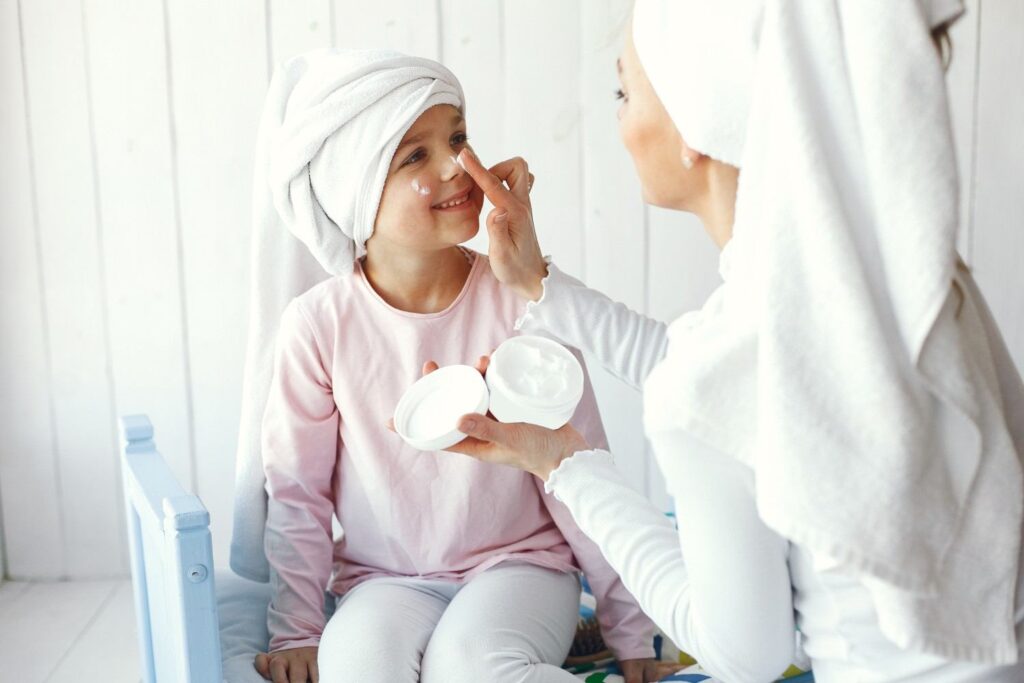
Common childhood skin conditions
Each month a woman releases an egg (ovulation). Sperm must travel through the cervix and uterus to meet the egg in a fallopian tube. The fertilised egg then moves to the uterus and implants. A problem at any step in either partner can delay pregnancy.
Common causes in women
Eczema (atopic dermatitis): dry, itchy, red patches, often in skin folds, on the cheeks or behind the knees. It often starts in infancy and may run in families with asthma or hay fever.
Heat rash: small red bumps in sweaty areas, common in Qatar’s summer.
Nappy rash: irritated skin under the nappy from moisture and friction.
Cradle cap: greasy yellow scales on a baby’s scalp, usually harmless.
Hives and allergic reactions: raised itchy welts triggered by foods, medicines, insect bites or infections.
Contact dermatitis: a rash after touching an irritant, such as soaps, plants or nickel.
Infections: impetigo (honey-coloured crusts), ringworm, warts, molluscum and scabies.
Acne: can begin in pre-teens as hormones change.
Birthmarks and moles: most are harmless but some need monitoring.
Book your appointment
Limited slots available this month — Reserve yours now
Book a Dermatology Consultation
An everyday skin routine
- Bathe briefly. Five to ten minutes in lukewarm water with a mild, fragrance-free cleanser.
- Moisturise daily. Apply a thick, fragrance-free moisturiser within three minutes of bathing and whenever skin feels dry.
- Choose soft clothing. Loose cotton reduces sweat and friction.
- Wash clothes gently with mild detergent and rinse well.
- Keep nails short to limit scratching damage.
- Rinse after swimming and moisturise straight afterwards.
Sun protection for Qatar
Sun damage in childhood adds up over a lifetime. Keep babies under six months out of direct sun. For older children, use a broad-spectrum sunscreen of SPF 30 or higher, reapply every two hours and after swimming, and add hats, sunglasses and UV-protective swimwear. Avoid peak sun between late morning and mid-afternoon. Our post on summer skin care and sun protection has more tips.
When to see a dermatologist
- A rash is spreading, painful, blistering or not improving with simple care
- Itching is disturbing your child’s sleep or school
- You see yellow crusts or pus, or your child has fever with a rash
- A mole or birthmark changes in size, shape or colour
- Eczema is not controlled by regular moisturiser
- You suspect an allergy
- A skin condition is affecting your child’s confidence
Diagnosis and treatment
A dermatologist examines the skin, asks about triggers and family history, and may suggest allergy testing or skin swabs. Treatments are chosen for your child’s age and may include moisturisers, mild steroid creams or non-steroid alternatives, antibiotics or antifungals for infections, and trigger avoidance.
Emotional support matters
Fertility challenges can strain mood and relationships. Talk openly with your partner, lean on trusted support, and speak with your doctor if you feel overwhelmed. You do not need to go through it alone.
