


 عربي


For a lot of people, the first sign comes on the stairs. A twinge on the way down, a stiff knee after sitting through a long meeting, a dull ache after the evening walk that wasn’t there a few years ago. It is easy to put it down to age and carry on, adjusting your day around it without ever quite deciding to.
But knee pain after 40 is not something you simply have to live with. It has a cause, and in most cases there is something that can be done, from simple exercises and weight management to injections and, when needed, surgery. The earlier the cause is identified, the more options you tend to have.
This guide covers the common causes of knee pain in adults, the treatments available, the signs that need prompt attention, and when it is time to see an orthopaedic doctor in Doha.
Book an Orthopedics Consultation
At American Hospital Clinics Doha today.
Quick Answer
The most common cause of knee pain after 40 is osteoarthritis, the gradual wear of the cartilage that cushions the joint. Other causes include meniscus tears, ligament injuries, tendon problems, and inflammatory conditions such as gout. Many cases improve with exercise, physiotherapy, weight management, and pain relief. See an orthopaedic doctor in Doha if the pain lasts more than a few weeks, keeps coming back, causes swelling or locking, or limits your walking, sleep, or daily life. If your knee is hot, red, and swollen with a fever, or you cannot put weight on it after an injury, get urgent medical help.
Key Takeaways
- Knee pain is common after 40, but it is not just “part of getting older”
- Osteoarthritis is the leading cause, though tears, tendon problems, and gout are also common
- Early treatment, including strengthening exercises, can slow progression and ease pain
- Carrying extra weight puts significant extra load on the knees
- Surgery is only one option and is usually considered after other treatments have been tried
- A hot, red, swollen knee with a fever, or an inability to bear weight, needs urgent care
- A proper diagnosis from an orthopaedic specialist helps you avoid treatments that don’t suit your problem
Why Knee Pain Becomes More Common After 40
The knee takes a great deal of load. With every step, it carries several times your body weight. Over the decades, the smooth cartilage on the ends of the bones thins, the cushioning menisci become less resilient, and the muscles and tendons that support the joint may weaken, especially if you spend long periods sitting. Extra weight, old injuries, and family history add to the picture.
None of this means pain is inevitable. Plenty of people stay active and comfortable well into later life, and the right approach, started early, helps.
Common Causes of Knee Pain After 40
Osteoarthritis: The cartilage gradually wears down, causing pain that is worse with activity, stiffness after rest or first thing in the morning, swelling, and sometimes a grinding feeling. It tends to develop slowly over years.
Meniscus tear: The menisci are two C-shaped pads of cartilage that cushion the joint. They can tear from a twist, or simply from wear in middle age. Symptoms include pain along the joint line, swelling, catching, and sometimes the knee locking or giving way.
Ligament injury: Injuries to the anterior cruciate ligament (ACL), medial collateral ligament, and others often come from sports or a fall. The knee may feel unstable or give way.
Patellofemoral pain: Pain around or behind the kneecap, often worse going up or down stairs, squatting, or after long periods sitting. Muscle imbalance and overuse are common reasons.
Tendinopathy and bursitis: Irritation of the tendons around the knee, or of the small fluid-filled sacs called bursae, leads to localised tenderness and pain with movement. Kneeling and repetitive activity can contribute.
Gout and pseudogout: Crystal deposits in the joint can cause sudden, severe pain, redness, warmth, and swelling, often overnight.
Inflammatory arthritis: Conditions such as rheumatoid arthritis can affect the knees, usually with prolonged morning stiffness and swelling in several joints.
Referred pain: Pain from the hip or lower back sometimes shows up in the knee, which is one reason a proper examination matters.
Common Signs That Need Attention
- Pain that has lasted more than a few weeks, or keeps returning
- Swelling or a feeling of fullness around the knee
- Stiffness, especially in the morning or after sitting
- A grinding, clicking, or catching sensation
- The knee giving way or feeling unstable
- Difficulty with stairs, getting up from a chair, or walking distances
- Pain that wakes you at night
- A knee that will not fully straighten or bend
Warning Signs That Need Urgent Care
Seek urgent medical help, or call 999, if:
- The knee is hot, red, and swollen, especially with a fever or feeling generally unwell, as this can signal a joint infection
- You cannot put any weight on the leg after an injury
- The knee looks deformed after a fall or accident
- You heard a pop at the time of injury, followed by rapid swelling
- Your calf is swollen, painful, and warm, particularly after a long flight or period of immobility, as this may be a blood clot
- Your lower leg becomes pale, cold, or numb
Who’s at Higher Risk
- People who are overweight, as extra weight adds load to the knees with every step
- Those with a past knee injury, such as a ligament or meniscus tear
- Women, particularly after menopause
- People with a family history of osteoarthritis
- Those in jobs or hobbies with repeated kneeling, squatting, or heavy lifting
- People who are inactive, with weak thigh and hip muscles
- Anyone with diabetes, gout, or inflammatory arthritis
- Those with low vitamin D levels, which are common in this region
Why Knee Pain Shouldn’t Be Put Off
Many people wait, hoping the pain will settle. Some problems do, but others quietly progress. A small meniscus tear can enlarge, and an unstable knee can damage the cartilage further. Pain also leads people to move less, which weakens the muscles that protect the knee and makes the problem worse. Seeing a specialist earlier usually means simpler treatment and a better chance of keeping the joint working well.
Book your appointment
Limited slots available this month — Reserve yours now
BOOK YOUR ORTHOPEDICS CONSULTATION NOW
When to See an Orthopaedic Doctor in Doha
Book an appointment if:
- Knee pain has lasted more than two to three weeks without improving
- The pain is limiting walking, work, sleep, or exercise
- Your knee swells, locks, catches, or gives way
- You have had an injury and the knee is still painful or unstable
- Over-the-counter painkillers are no longer enough
- You have several painful joints, or long morning stiffness
- You are considering injections or surgery and want an expert opinion
- An orthopaedic doctor in Doha can examine the knee, identify the cause, and explain which treatments are likely to help.
How Knee Pain Is Diagnosed
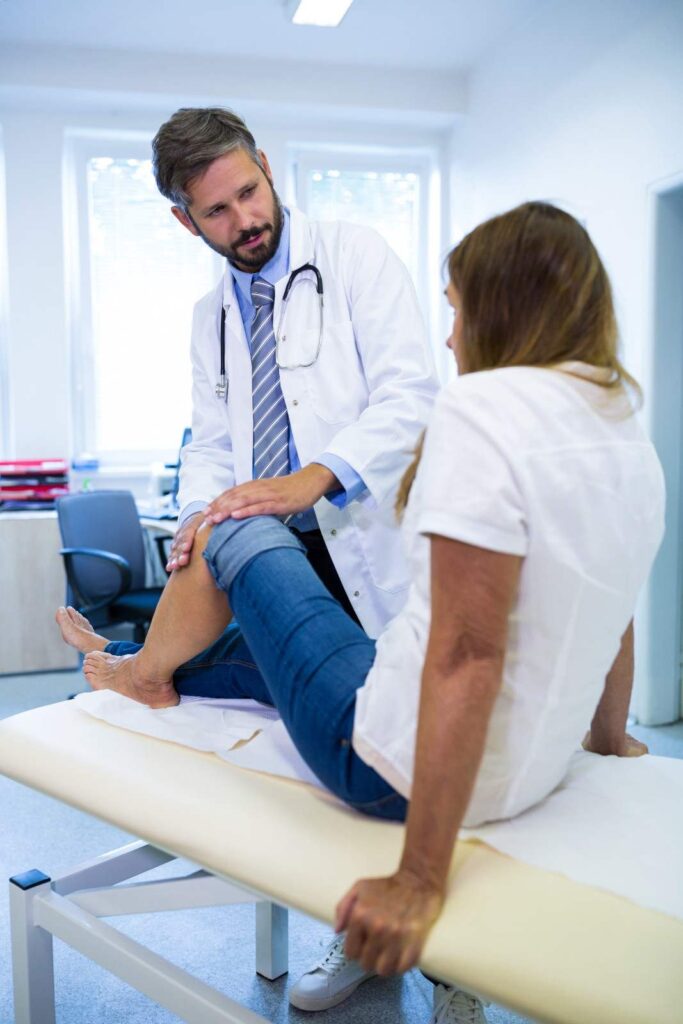
Your doctor will begin with questions: when the pain started, where it is, what makes it better or worse, any injuries, your work and activities, and what you have tried. They will examine the knee, checking for swelling, tenderness, range of movement, stability, and how you walk. They may also check your hip and back.
Depending on what they find, they may suggest:
- X-rays: to look at the joint space, bone changes, and alignment, and to confirm osteoarthritis
- MRI scan: to look at the soft tissues, including the menisci, ligaments, and cartilage, when the history or examination suggests a tear or other problem
- Ultrasound: to look at tendons, fluid, and swelling
- Blood tests: to check for gout, inflammatory arthritis, or infection
- Joint fluid analysis: if fluid is drawn from the knee, to look for crystals or infection
Not everyone needs a scan. Many people are diagnosed from the history, examination, and an X-ray.
Treatment Options
Treatment depends on the cause, how severe it is, your age, your activity level, and what you want to get back to doing. Most people start with simple measures.
- Activity changes: adjusting rather than stopping exercise. Swimming, cycling, and walking on flat ground are often easier on the knees than running or deep squats
- Weight management: even a modest amount of weight loss can noticeably reduce load on the knees and ease pain
- Physiotherapy and strengthening: exercises for the thigh, hip, and core muscles improve support and function, and are among the most effective treatments for knee osteoarthritis
- Pain relief: paracetamol, anti-inflammatory gels, or tablets as advised. Anti-inflammatory tablets are not suitable for everyone, particularly people with stomach, kidney, or heart problems, so check with a doctor or pharmacist
- Supports and footwear: knee sleeves or braces, walking aids, and suitable shoes or insoles can help some people
- Injections: corticosteroid injections can reduce inflammation and give temporary relief. Other injections, such as hyaluronic acid or platelet-rich plasma (PRP), are sometimes used, though the evidence for them varies, and your doctor will discuss whether they are likely to help in your case
- Treating other conditions: managing gout, inflammatory arthritis, or vitamin D deficiency where present
- Keyhole (arthroscopic) surgery: used in selected cases, such as a torn meniscus that causes locking, rather than for general wear and tear
- Realignment surgery (osteotomy): may be an option for younger or active patients with wear on one side of the knee
- Partial or total knee replacement: considered when pain and stiffness severely affect daily life and other treatments have not helped enough. Modern replacements are reliable for many patients, and your surgeon will explain the benefits, risks, and recovery
Tips for Living With Knee Pain
- Keep moving gently. Rest helps during a flare, but long periods of inactivity make stiffness worse
- Warm up before activity, and build up gradually
- Use ice for 10 to 15 minutes after activity to ease swelling, and heat for stiffness
- Avoid long periods of kneeling or deep squatting if they trigger pain
- Take the stairs one at a time, using the handrail
- Wear supportive shoes, and replace worn ones
- Build up strength in your thighs and hips, ideally with guidance from a physiotherapist
- Pace yourself on busy days rather than pushing through the pain
Tips for Family Members
If a parent or partner is limping, avoiding stairs, or giving up walks, encourage them to be seen. People often assume pain is unavoidable and stop mentioning it. Offer to go to the appointment, help with exercises, and walk with them at a comfortable pace. At home, small changes such as a raised seat, a shower stool, and grab rails can make daily life easier.
Knee Pain and Qatar’s Lifestyle Factors
A few patterns of life in Qatar are worth noting. Long summers push exercise indoors, and many people spend most of the day sitting in offices or cars. Reduced activity weakens the muscles that support the knees, and weight gain adds load to them. Low vitamin D is common here and can contribute to bone and muscle problems. Floor sitting, kneeling, and deep squatting are a part of daily life and worship for many, and can be difficult for people with painful knees. If sitting on the floor is painful, a low stool or chair is a reasonable alternative and your doctor can advise on what is safe for you.
Small habits help: walk in the cool of the evening or in an indoor mall, try swimming or cycling during the hot months, stand and stretch every hour at work, and keep up with routine checks for diabetes and vitamin D.
What a Typical Visit Looks Like
Initial Consultation
Your orthopaedic doctor asks about your pain, injuries, and daily activities, then examines your knee, hip, and the way you walk.
Tests
If needed, X-rays, an MRI or ultrasound scan, or blood tests help confirm the cause.
Personalized Plan
Results guide your treatment, which may include exercises, medication, injections, or surgery, with follow-up to check your progress.
How American Hospital Qatar’s Orthopedics Department Can Help
At American Hospital Qatar, our Orthopedics Department assesses and treats adults with knee pain, joint problems, and sports and everyday injuries.
- Experienced Orthopaedic Specialists: careful assessment of knee pain and related joint problems
- Diagnostic Support: guidance on which scans and tests are useful for you
- Personalized Treatment Plans: from exercise and medication to injections or surgical options, matched to your needs
- Rehabilitation Guidance: advice on physiotherapy and getting back to the activities you enjoy
- Insurance Accepted: our team assists with pre-authorisation and claims
Frequently Asked Questions
Is knee pain after 40 always arthritis?
Should I rest or exercise a painful knee?
Do I need an MRI for knee pain?
Do knee injections work?
When is knee replacement needed?
Can losing weight help my knees?
When should I see an orthopaedic doctor in Doha?
Conclusion
Knee pain after 40 is common, but it is not something to ignore or simply accept. Most causes can be identified, and many respond well to exercise, weight management, and simple treatments, with surgery kept for the cases that need it. The sooner you find out what is behind the pain, the more choices you have.
If your knee has been bothering you for weeks, or it is stopping you doing what you enjoy, a visit to an orthopaedic doctor in Doha is a sensible next step. American Hospital Qatar’s Orthopedics Department is ready to help. Call +974 44421999 or visit americanhospital.qa to book a consultation.
