


 عربي


Many people first hear the words “bone graft” at a dental implant consultation, usually right after being told there isn’t enough bone to place an implant safely. It can feel like a setback, and the term sounds bigger than it is. In most cases, a bone graft is a planned, routine step that rebuilds the foundation your teeth or implants need.
When a tooth is lost or removed, the bone that held it begins to shrink. Over months and years, the jaw can become thinner and lower, which makes it harder to fit an implant, a denture, or a bridge. A bone graft, and its close relative ridge augmentation, rebuild that lost volume so treatment can go ahead on solid ground.
This guide explains the procedure step by step, so you know what to expect if you are considering a bone graft in Qatar, from the first consultation to full healing.
Book an Oral & Maxillofacial Consultation
At American Hospital Clinics Doha today.
Quick Answer
A bone graft adds bone material to an area of the jaw where bone has been lost, so that it can support a dental implant or improve the fit of a denture. Ridge augmentation is a type of bone graft that rebuilds the width or height of the jaw ridge after tooth loss. The process usually involves a consultation and 3D scan, the graft procedure under local anaesthesia, and a healing period of about three to six months before an implant is placed. A bone graft in Qatar should be planned by an oral and maxillofacial surgeon who can assess your jaw, your health, and the best graft material for you.
Key Takeaways
- Bone shrinks after tooth loss, and a graft rebuilds the volume needed for an implant
- Ridge augmentation restores the width or height of the jaw ridge, and a sinus lift adds bone in the upper back jaw
- A 3D scan (CBCT) shows how much bone you have, which guides the plan
- Most grafts are done under local anaesthesia, with sedation available for anxious patients
- Graft material can come from your own body, a donor, an animal source, or a synthetic product
- Healing usually takes three to six months, and longer in some cases, before an implant can be placed
- Smoking, shisha, and poorly controlled diabetes can reduce the chances of success
- Following your surgeon’s aftercare instructions is a big part of the result
What Is a Bone Graft, and Why Might You Need One?
Jawbone stays strong because chewing and the pressure from tooth roots keep it active. When a tooth is lost, that stimulation stops and the bone slowly dissolves. In the first year after an extraction, a noticeable amount of bone width and height can be lost.
You might need a bone graft if:
- You are planning a dental implant and the bone is too thin or too short
- A tooth has been removed and you want to preserve the socket, to prevent bone loss
- You have lost teeth some time ago and the ridge has become narrow or flat
- Gum disease or infection has damaged the bone around a tooth
- You have had an injury, cyst, or tumour removed that left a gap in the jaw
- Your dentures no longer fit well because the ridge has shrunk
Types of Bone Graft and Ridge Augmentation
Socket preservation: Done at the time of a tooth extraction. Graft material is placed in the empty socket, and covered with a membrane, to hold the shape of the bone while it heals.
Ridge augmentation: Used when the ridge has already narrowed or lowered. The surgeon lifts the gum, places graft material along the ridge, covers it with a membrane, and closes the gum over it.
Sinus lift (sinus augmentation): Used in the upper back jaw, where the sinus sits close to the bone. The surgeon lifts the sinus lining slightly and places graft material underneath it to create room for an implant.
Block grafts: For larger defects, a small block of bone, often taken from another part of the jaw, is fixed in place with tiny screws.
Graft Materials
- Autograft: bone taken from your own body, often from the jaw or chin. It carries living cells and heals well, but needs a second surgical site
- Allograft: processed bone from a human donor, tested and sterilised
- Xenograft: processed bone mineral from an animal source, usually bovine
- Alloplast: synthetic materials designed to support new bone growth
Your surgeon will recommend the type that suits the size of the defect, your health, and your preferences. If you have dietary or religious considerations about the source of the material, mention them at your consultation so the options can be discussed.
The Bone Graft Process, Step by Step
1. Consultation and examination
Your surgeon reviews your dental and medical history, the medicines you take, and your goals. They examine your teeth, gums, and bite, and check the healing of any extraction sites.
2. Imaging and planning
A 3D scan (CBCT) shows the height, width, and quality of your bone, and the position of nerves and sinuses. This allows precise planning. Your surgeon explains whether you need a graft, which type, and how it fits into the wider treatment, including implants.
3. Preparing for surgery
Any gum disease, infection, or decay is treated first. You will be given instructions about eating, medicines, and, if you smoke, about stopping beforehand. Tell your surgeon about conditions such as diabetes, heart disease, bleeding problems, or medicines such as blood thinners and bisphosphonates.
4. The procedure
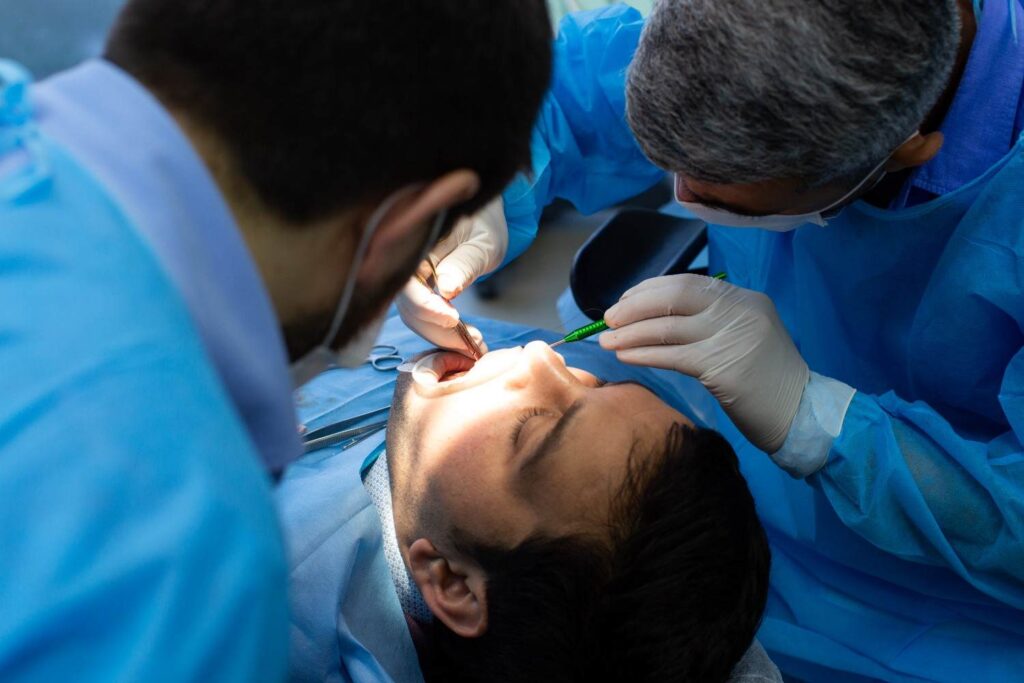
Most grafts are done in the clinic or day-surgery setting under local anaesthesia, so the area is numb. Sedation or general anaesthesia may be offered for larger procedures or anxious patients. The surgeon lifts the gum, cleans the area, places the graft material, covers it with a protective membrane, and closes the gum with stitches. Procedures often take 45 minutes to two hours, depending on how much is involved.
5. The first days after surgery
Some swelling, tenderness, and minor bleeding are normal. Swelling usually peaks at about two to three days and then eases. You will be given instructions for pain relief, medicines, and oral hygiene.
6. Healing and integration
Over the following months, your own bone cells grow into the graft and gradually replace it with new bone. This usually takes about three to six months, and sometimes longer for larger grafts. You will have check-ups to monitor healing, and a follow-up scan may be done before the next step.
7. Implant placement or final treatment
Once the bone is ready, the implant is placed, or in some cases the graft and implant are done together. After the implant has bonded with the bone, the final crown, bridge, or denture is fitted.
Aftercare: What Helps
- Take medicines exactly as prescribed
- Use a cold pack on the cheek in the first 24 to 48 hours to limit swelling
- Eat soft, cool foods at first and chew on the other side
- Avoid touching, pulling, or pressing on the area with your tongue or fingers
- Keep your mouth clean with the rinse your surgeon recommends, and avoid brushing the area until told it is safe
- Avoid smoking, shisha, and alcohol while you heal
- After a sinus lift, do not blow your nose, avoid sneezing with your mouth closed, and avoid heavy straining or air travel until your surgeon says it is safe
- Keep all follow-up appointments
Possible Risks and Complications
Bone grafting has a high success rate, but like any surgery it carries some risk:
- Swelling, bruising, and discomfort, which are common
- Infection in the area
- Loss or partial failure of the graft
- Exposure of the membrane or graft material through the gum
- Temporary numbness or tingling, which can be reported if a nerve is irritated
- Sinus problems after a sinus lift
- Pain at the donor site, if bone is taken from another part of the body
Following your surgeon’s instructions and attending all reviews reduces these risks.
Book your appointment
Limited slots available this month — Reserve yours now
BOOK YOUR ORAL & MAXILLOFACIAL CONSULTATION NOW
When to Call Your Surgeon
- Contact your surgeon promptly if you have:
- Increasing pain or swelling after the third day
- A bad taste or smell, or pus from the area
- Fever
- Bleeding that does not stop with gentle pressure
- Loose graft material, or the membrane or stitches coming away early
- Numbness that is not improving
Call 999 or go to the nearest emergency department if swelling spreads to the neck or floor of the mouth, or if you have difficulty breathing or swallowing.
Who’s Likely to Need a Graft, and Who Needs Extra Care
People often considered for a bone graft:
- Those who have lost teeth and want implants
- People who lost teeth years ago and have a thin ridge
- Patients with gum disease that has caused bone loss
- Those who need a tooth removed and want to keep the bone shape
People who need extra care or a closer discussion:
- Smokers and shisha users
- People with diabetes, especially if it is poorly controlled
- Those with gum disease that has not been treated
- Patients on medicines such as bisphosphonates, steroids, or blood thinners
- Anyone with a history of radiotherapy to the head and neck
- People with heart conditions or weak immunity
Why Not Delay a Graft?
Bone loss continues over time. The longer a gap is left, the more bone is lost, and the more extensive the graft may need to be. Acting early, or preserving the socket at the time of extraction, can make later treatment simpler, shorter, and more predictable. Putting it off can also lead to shifting of neighbouring teeth and problems with chewing.
Bone Graft in Qatar: Local Factors
A few points are worth considering when planning dental surgery in Qatar. Shisha and cigarette smoking are common and both interfere with healing, so many surgeons will ask you to stop well before and after the procedure. Diabetes is also common in this region, and good blood sugar control matters for healing. If you are planning treatment around Ramadan, talk to your surgeon about timing, because medicines, hydration, and soft-food needs in the first days after surgery can be harder during fasting. Many patients also travel for work or family visits, so make sure your timetable allows for follow-up appointments over the healing period.
What a Typical Journey Looks Like
Initial Consultation
Your surgeon reviews your history, examines your mouth, and discusses your goals and options.Scan and Planning
A 3D scan shows your bone, and your surgeon explains the graft type, timing, and the full treatment plan.Graft and Healing
The graft is placed, followed by regular reviews during the healing months, then implant placement or final restoration.
How American Hospital Qatar’s Oral & Maxillofacial Surgery Department Can Help
At American Hospital Qatar, our Oral & Maxillofacial Surgery Department assesses and treats patients who need bone grafts, ridge augmentation, and related jaw surgery.
- Experienced Oral & Maxillofacial Surgeons: careful assessment of your bone and a clear plan
- Advanced Imaging Guidance: support in choosing the right scan for planning
- Personalized Treatment Plans: the right graft type and timing for your situation
- Ongoing Follow-Up: regular reviews during healing and after implant placement
- Insurance Accepted: our team assists with pre-authorisation and claims
Frequently Asked Questions
Is a bone graft painful?
How long does a bone graft take to heal?
Do I always need a bone graft before a dental implant?
What is the difference between a bone graft and ridge augmentation?
Will my body reject the graft?
Can I smoke after a bone graft?
Is a bone graft in Qatar covered by insurance?
Conclusion
A bone graft sounds like a big step, but it is a carefully planned process built to give dental implants and dentures a firm base. Knowing the steps, from the scan to healing to the final restoration, takes much of the worry out of it.
If you have been told you do not have enough bone for an implant, or you are about to have a tooth removed, early planning makes a real difference. If you are considering a bone graft in Qatar, American Hospital Qatar’s Oral & Maxillofacial Surgery Department is ready to help. Call +974 44421999 or visit americanhospital.qa to book a consultation.
