عربي
عربي


By Dr. Sajjad Ali, Specialist Cardiologist | American Hospital Clinics Doha | QCHP License P17304
“You feel fine. You work out sometimes. You’re young. So why would you need a cholesterol check? Here’s what most people your age don’t know — until it’s too late.”
Ahmed was 38. No chest pain. No shortness of breath. He played football on weekends, ate home-cooked food, and had zero family history of heart trouble. He came to us not because he felt sick — but because his wife insisted after reading something online.
His LDL was 187. His triglycerides were through the roof. His coronary calcium score showed early but significant plaque. “If you hadn’t come in,” Dr. Ali told him, “we would probably be having a very different conversation in five years.”
Ahmed is not a rare case. He is, in our experience, the typical case.
Most people in Qatar under 40 have never had their cholesterol checked. And most of them have absolutely no idea whether they should worry about it. Here is the truth:
Your body will not tell you if your cholesterol is dangerously high. It just won’t. There are no symptoms. No warning signals. Nothing.
And quietly — while you feel completely fine — plaque may already be building up inside your arteries. It has been doing so, in fact, since your early 20s.
“The most dangerous patient is the one who feels perfectly well. High cholesterol doesn’t announce itself — until it does, and by then, you’re in an ambulance.”
So What Exactly Is Cholesterol Doing to You?
Cholesterol isn’t evil by itself. Your body actually makes it and needs it — to build cell walls, produce certain hormones, and help your digestive system work. The problem is too much of the wrong kind, floating around in your blood with nowhere useful to go.
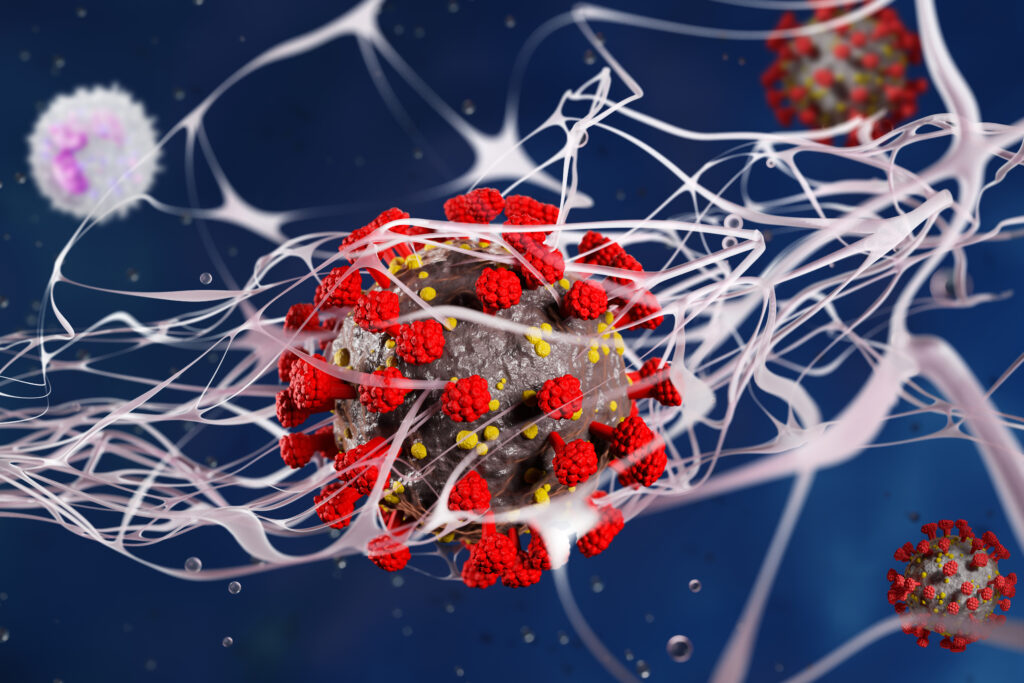
Think of your arteries like water pipes. Over time, excess LDL cholesterol — the “bad” kind — starts sticking to the inner walls. It hardens. It accumulates. Eventually, the pipes narrow. Then one day, a clot forms over a patch of that plaque, the artery blocks completely, and you have a heart attack. Or a piece breaks off and travels to the brain, and you have a stroke.
What makes this genuinely terrifying is that the narrowing process takes years. Your arteries can be 50%, 60%, even 70% blocked and you will feel absolutely nothing unusual. No pain. No fatigue. No signs. Just a perfectly ordinary Tuesday morning — until it isn’t.
The four numbers you actually need to understand
♥ LDL (“Bad” Cholesterol): This is the one that builds plaque. The lower it is, the better. Most doctors want yours below 100 mg/dL. If you have diabetes or high blood pressure too, below 70 is the target.
♥ HDL (“Good” Cholesterol): Think of this as your body’s cleanup crew. It scoops up excess cholesterol and hauls it back to the liver. Low HDL is a silent risk factor even when everything else looks normal.
♥ Triglycerides: These spike when you eat too much sugar, drink regularly, or don’t exercise. High triglycerides combined with low HDL is one of the most dangerous combinations in cardiology — and extremely common in Qatar.
♥ Lp(a) — the one nobody talks about: Lipoprotein(a) is a genetically determined risk factor that standard panels often miss entirely. New guidelines recommend every adult gets tested once. Elevated Lp(a) can double your lifetime heart attack risk regardless of how healthy your other numbers look.
| Test | Target Range | Details |
|---|---|---|
| LDL — your main target (mg/dL) | Below 100 |
Below 70 if you have diabetes or high blood pressure. Below 55 if you already have heart disease. |
| Total Cholesterol (mg/dL) | Below 200 |
Anything above 240 is considered high risk. 200–239 is borderline and should be monitored closely. |
| HDL — good cholesterol (mg/dL) | Above 50 |
Above 40 for men, above 50 for women. Below 40 is a risk factor even if other values are normal. |
| Triglycerides (mg/dL) | Below 150 |
Above 200 is concerning. Above 500 is a medical emergency. Often increases with high sugar intake or frequent alcohol consumption. |
| Lp(a) — hidden risk (nmol/L) | Below 125 |
Above 250 nmol/L can double lifetime heart attack risk. This value is genetic and cannot be changed through diet or exercise. |
Who Actually Needs to Worry About This Before 40?
Honestly? More people than you’d think. High cholesterol isn’t only about what you eat. Genetics plays a massive role. Stress plays a role. Where you come from plays a role. Some people eat perfectly and still have dangerously elevated LDL because their liver overproduces it — a condition called Familial Hypercholesterolaemia that affects roughly 1 in 250 people worldwide and goes undiagnosed in about 90% of cases.
You should get checked right now if any of the following sounds like you:
♥ Your father or brother had a heart attack before 55, or your mother or sister before 65 — family history is one of the strongest predictors we have
♥ You have diabetes or prediabetes — diabetes and high LDL together are an especially aggressive combination that accelerates arterial damage
♥ You carry extra weight around your middle — abdominal fat drives up triglycerides and tanks your HDL
♥ You smoke, even occasionally — smoking damages the inner lining of your arteries and makes plaques far more likely to rupture
♥ You are of South Asian descent — South Asian populations develop cardiovascular disease earlier and more aggressively than other ethnicities at the same cholesterol levels
♥ You have high blood pressure — hypertension and high cholesterol together multiply risk dramatically
♥ You’ve never been tested — honestly, that alone is reason enough
Had chest pain recently?
Don’t ignore it. Book a Cardiology Check
What Happens at a Cholesterol Screening
There is nothing complicated or intimidating about it. Here is exactly what to expect:
A conversation, not a lecture:
Dr. Sajjad Ali will sit with you and actually listen — your lifestyle, your family history, what you eat, how you sleep, whether stress is a factor. This shapes the whole picture before any test is run.
A blood draw that takes about 90 seconds:
The lipid panel measures total cholesterol, LDL, HDL, and triglycerides. In many cases you don’t even need to fast beforehand.
Advanced markers if your situation calls for it:
Lp(a) and ApoB testing give a far more complete picture of long-term cardiovascular risk than standard panels alone — and we offer both.
An ECG if appropriate:
A quick, painless heart trace that takes about three minutes. For patients at elevated risk, this adds valuable information.
Your results explained in plain language:
Not a sheet of numbers handed to you at the door. Dr. Ali will walk through what your results mean and give you a clear, specific action plan.
Can You Fix High Cholesterol Without Medication?
Often, yes — especially if you catch it early, before the numbers are severe and before other risk factors have piled up. This is why “come in early” is not just marketing language. It’s the difference between fixing this with a diet change and a morning walk, versus needing a daily pill for the rest of your life.
Cut the saturated fat seriously:
Red meat, full-fat dairy, fried foods, the good stuff at every family gathering. Saturated fat is the single biggest dietary driver of LDL. Reducing it can lower LDL by 10–20% on its own.
Move consistently, not heroically:
Thirty minutes of brisk walking five days a week raises HDL, lowers triglycerides, and improves insulin sensitivity. It’s unglamorous and it works.
Quit smoking. Full stop:
Within a year of quitting, HDL rises, arterial damage begins to reverse, and overall cardiac risk drops significantly.
Watch your sugar, not just your fat:
High sugar intake drives up triglycerides dramatically. This is one of the most common patterns we see in young patients in Qatar.
If lifestyle isn’t enough medication is not failure:
Statins are among the most studied, most proven medications in the history of cardiology. They are safe, cheap, and genuinely save lives. Needing one means your liver is doing something your willpower can’t override — not that you’ve failed.
⚠ What Happens If You Don’t Get Screened
Nothing for years, probably. That’s the trap. And then one day — a heart attack, a stroke, or a diagnosis that says your arteries are already significantly narrowed and the window for easy intervention has passed. Untreated high cholesterol increases lifetime risk of major cardiac events by 2 to 4 times.
Medically reviewed and endorsed by:
Doctor’s Review & Clinical Oversight
This content is reviewed and endorsed by:
Dr. Sajjad Ali
Specialist Cardiologist
QCHP License: P17304
American Hospital Clinics, Qatar
“I have had this conversation more times than I can count. A patient in their late 30s, no symptoms, came in almost reluctantly — and we find something that, left another five years, would have ended very badly. The thing is, we could have caught it at 32. At 30. The treatment would have been simpler. The damage would have been less. Checking your cholesterol is not something you do when you feel unwell. It is something you do to make sure you keep feeling well.”
Book Your Cardiac Screening — Today, Not “Soon”
Same-day and next-day appointments available. This is the part where most people say “I’ll sort it next week.” Don’t be that person.
C Ring Road, Al Muntazah Street, Doha, Qatar
Limited time offer for first-time patients. Call +974 44038777 to confirm availability.
Why Come to American Hospital Clinics Doha?
♥ You see a specialist, not a triage nurse.
Dr. Sajjad Ali is a fully qualified Specialist Cardiologist (QCHP P17304) — not a GP who happens to order labs. When it comes to heart risk, this matters enormously.
♥ We test what other clinics skip.
Standard panels miss Lp(a) and ApoB entirely. We offer both, because in high-risk patients these markers change the entire clinical picture.
♥ Most major insurance plans in Qatar accepted.
Our team checks your coverage before the appointment — no surprises when you arrive.
♥ You leave with a plan, not just a printout.
Every patient gets a personalized 10-year and 30-year cardiovascular risk assessment with specific, actionable next steps.
♥ Same-day and next-day appointments available.
C Ring Road, Al Muntazah Street, Doha — easy to reach from anywhere in the city, with dedicated male and female consultation services.
“We treat people here, not numbers. You’ll know the difference within the first five minutes.”
What Does Cardiac Screening Actually Cost?
Less than you’d think — and far less than the alternative. Here are our current screening options:
| Package | Price | Notes |
|---|---|---|
| Basic Lipid Panel — Total cholesterol, LDL, HDL, triglycerides — the essentials | From QAR 120 | Most Common |
| Extended Cardiac Risk Panel — Lipid panel + Lp(a) + ApoB + blood glucose + blood pressure | From QAR 320 | Recommended |
| Comprehensive Heart Health Package — Full panel + ECG + Dr. Sajjad Ali consultation + action plan | From QAR 599 | Best Value |
Prices are indicative. Insurance coverage verified before your appointment. Call +974 44038777 for a personalised quote.
What Our Patients in Doha Say
Khalid A., 36, Doha · Verified Patient
Priya M., 34, Al Rayyan · Verified Patient
Mohammed S., 41, West Bay · Verified Patient
FAQs
Seriously — do I need to worry about this before 40?
What cholesterol number should I actually be worried about?
Can someone in their 30s actually die from this?
I genuinely feel fine. Why would I even go?
Do I have to fast before the blood test?
How often do I need to get this checked?
Can I fix this with diet alone or do I need pills?
Does American Hospital Clinics Doha accept insurance?
Ahmed came in reluctantly. He left with a plan that may have saved his life.
You don’t need symptoms. You don’t need a reason to be scared. You just need five minutes and a blood draw. Know your numbers. Make the call.
C Ring Road, Al Muntazah Street, Doha, Qatar