عربي
عربي


Both Straighten Teeth. The Right Choice Depends Entirely on Your Specific Bite, Lifestyle, and Treatment Goals — Not Which Option Is More Fashionable.
Clear aligners and traditional fixed braces both produce excellent orthodontic results. But they are not interchangeable. At American Hospital Clinics Doha, Dr. Vishnu Pushparajan gives patients an honest assessment — not a sales pitch — and recommends the approach that will produce the best outcome for their specific situation.
Clear Aligners: What They Are and How They Work
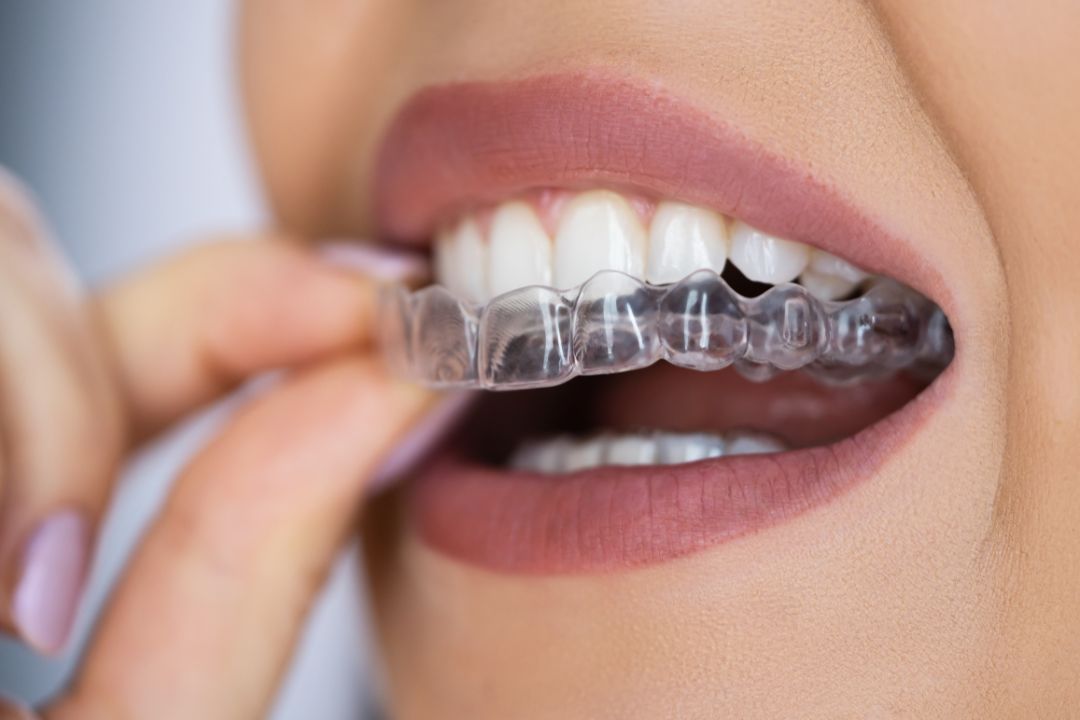
Clear aligners (Invisalign, Spark, and other systems) are a series of custom-made, removable transparent trays. Each tray moves the teeth a fraction of a millimetre toward the planned final position. Trays are changed every 1 to 2 weeks.
Advantages of Clear Aligners
- Near-invisible — virtually undetectable when worn
- Removable — taken out for eating, drinking, and oral hygiene
- No dietary restrictions — eat and drink anything (with aligners removed)
- Easier oral hygiene — brush and floss teeth normally
- Fewer emergency appointments — no wires to break or brackets to debond
- Predictable outcome simulation — see your result before treatment starts
Limitations of Clear Aligners
- Compliance-dependent — must be worn 20 to 22 hours per day. Insufficient wear dramatically slows treatment
- Not suitable for all cases — severe skeletal discrepancies, complex rotations, or significant vertical bite issues may require fixed appliances
- Generally more expensive — cost is typically higher than traditional braces for equivalent case complexity
Traditional Fixed Braces: What They Offer
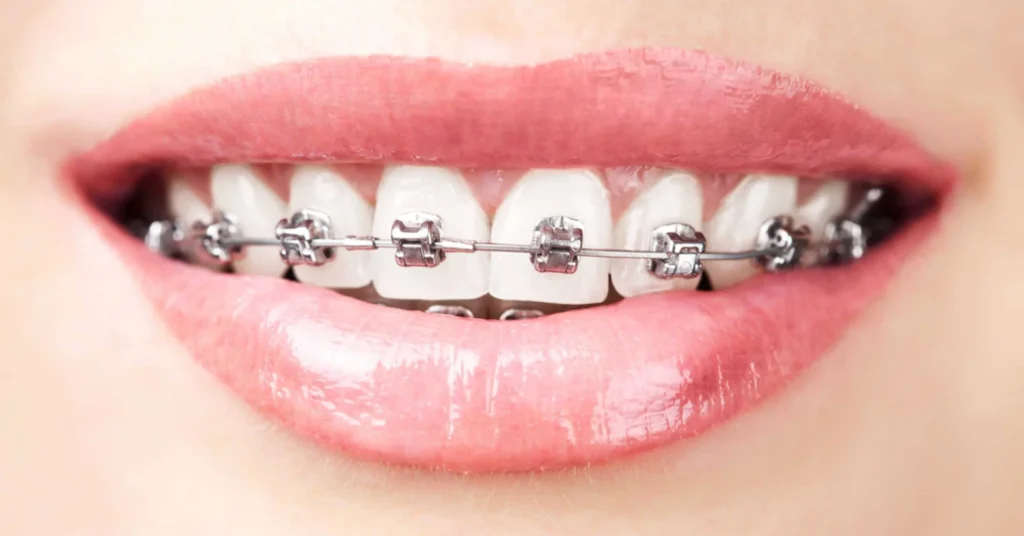
Fixed metal or ceramic brackets are bonded to the teeth and connected by archwires. The orthodontist adjusts the wire tension at monthly appointments, guiding tooth movement. Ceramic (tooth-coloured) braces offer a more aesthetic option.
Advantages of Traditional Braces
- Compliance-independent — they cannot be removed, so they work continuously 24 hours per day
- Better for complex cases — superior control for significant skeletal discrepancies, complex rotations, and severe crowding
- Generally more cost-effective — typically lower cost than clear aligner systems for equivalent case complexity
- Predictable for vertical bite correction — springs and auxiliaries provide forces not achievable with aligners
Limitations of Traditional Braces
- Visible — metal braces particularly so
- Dietary restrictions — hard, sticky, and chewy foods must be avoided
- Oral hygiene is more demanding — brackets and wires trap food and plaque
- Wire breaks and bracket debonding require urgent appointments
Which Is Right for You? The Honest Assessment
Clear aligners are typically best for: Mild to moderate crowding and spacing, adults with professional or social appearance concerns, motivated patients who will wear aligners consistently, and patients who want a predictable simulation before starting.
Fixed braces are typically better for: Severe crowding, complex bite correction, significant rotations, cases requiring skeletal anchorage, and cases where cost is a primary consideration.
The worst outcome in orthodontics is choosing a treatment system that is inappropriate for the complexity of the case. Dr. Vishnu Pushparajan gives you an honest assessment — not the most profitable recommendation.