عربي


A blocked nose that never fully clears. Sinus pressure that comes back every few weeks. A nosebleed that keeps returning, or a sense of smell that has quietly faded. These are the kinds of problems that often bring people to an ENT clinic, and they are also the kinds of problems that are hard to explain from symptoms alone.
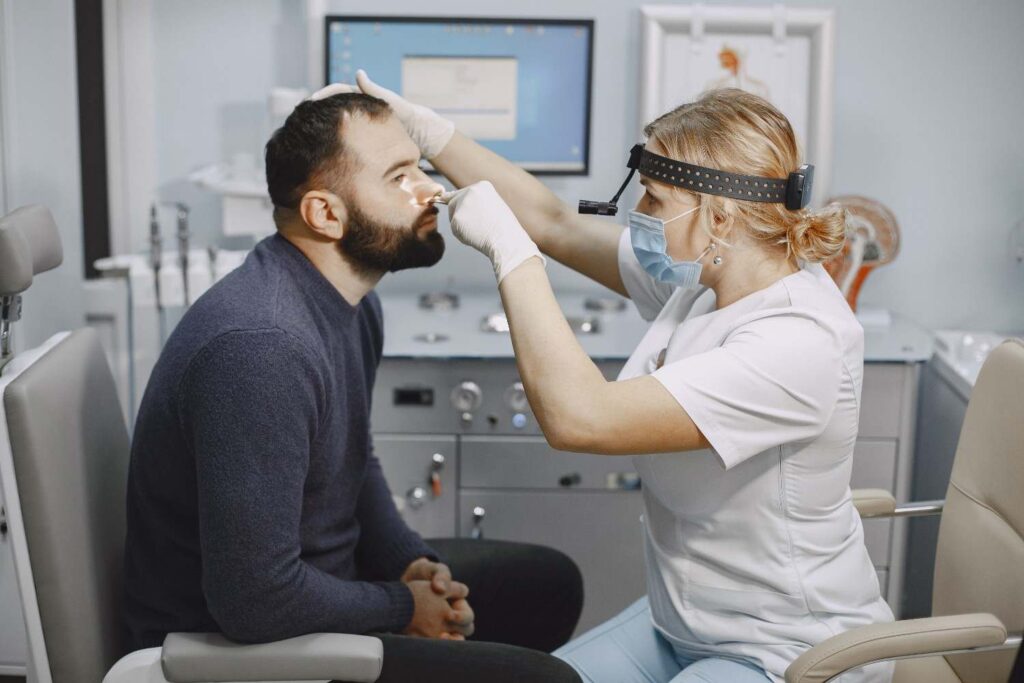
This is where nasal endoscopy comes in. Instead of guessing what is happening inside the nose, the doctor looks directly at it, using a thin, lit telescope that shows the lining, the airway, and the openings of the sinuses in clear detail. The test is quick, done in the clinic, and in most cases answers questions that a simple examination with a light cannot.
This guide explains what rigid nasal endoscopy is, why it is done, how it feels, and what happens afterwards. If you have been referred for one, or you are looking for an ENT specialist in Doha, it should help you know what to expect.
Book an ENT Consultation
At American Hospital Clinics Doha today.
Quick Answer
Rigid nasal endoscopy is a short outpatient procedure in which an ENT doctor passes a thin, rigid telescope with a light and camera into the nose to examine the nasal passages, the openings of the sinuses, and the back of the nose. It is used to diagnose problems such as chronic sinusitis, nasal polyps, a deviated septum, persistent nosebleeds, and unexplained loss of smell. It usually takes five to ten minutes, is done after numbing and decongestant spray, and most people go home straight away. An ENT specialist in Doha can tell you whether you need one and explain what the findings mean.
Key Takeaways
- Rigid nasal endoscopy lets the doctor see inside the nose and sinus openings clearly, in real time
- It is a short clinic procedure, usually five to ten minutes, with no need for general anaesthesia
- It helps diagnose chronic sinusitis, polyps, septal deviation, nosebleeds, and causes of blocked nose or loss of smell
- It can also be used to take samples, remove crusts or small foreign objects, and guide treatment in suitable cases
- The nose is prepared with a decongestant and numbing spray, so most people feel pressure rather than pain
- Mild side effects, such as sneezing, watery eyes, or a small amount of bleeding, are common and short-lived
- Serious complications are uncommon
- You can usually return to normal activities straight afterwards
What Is Rigid Nasal Endoscopy?
A nasal endoscope is a very thin telescope, usually 2.7 to 4 millimetres across, with a light source and a lens or camera at the tip. A rigid endoscope is straight and firm, and gives a bright, sharp, magnified image. It is often available with different viewing angles, such as 0, 30, or 70 degrees, which lets the doctor look around corners inside the nose and into areas that are otherwise out of sight.
The image appears on a screen, so the doctor can examine the area carefully, and in many clinics you can watch too. Images can be saved to your record, which helps when comparing changes over time or explaining the findings to you.
Rigid vs flexible nasal endoscopy
Both types look inside the nose, and each has its place.
- Rigid endoscopes: give a clearer, brighter, higher-resolution image, and allow small instruments to be used alongside. They are often preferred for examining the sinus openings and for detailed assessment
- Flexible endoscopes: are thin and bendable, and can be passed further back to examine the back of the nose, the throat, and the voice box. They are often used when the throat or voice is the main concern, or when the nose is very narrow
Your ENT doctor will choose the one that suits your symptoms, and sometimes uses both in the same visit.
Why Is a Nasal Endoscopy Done?
The nose and sinuses are made of narrow channels, and much of the lining is hidden from view. Nasal endoscopy allows the doctor to see:
- The inside of the nostrils and the nasal septum, the wall that divides the nose
- The turbinates, the ridges of tissue that warm and filter the air
- The openings of the sinuses
- The back of the nose, where it meets the throat, including the adenoid area and the openings of the ear tubes
Conditions it can help diagnose
- Chronic sinusitis: inflammation, swelling, or pus in the sinus openings
- Nasal polyps: soft, painless growths that block the airway and reduce smell
- Deviated septum: a crooked septum that narrows one or both sides of the nose
- Enlarged turbinates: a common cause of persistent blockage
- Allergic rhinitis and other causes of long-term blockage or runny nose
- Recurrent or persistent nosebleeds: finding the bleeding point
- Loss or reduced sense of smell
- Postnasal drip and persistent throat clearing
- Foreign objects, particularly in children
- Growths or masses in the nose or the back of the nose, which may need further tests
- Ear problems linked to the nose, such as repeated fluid behind the eardrum
- Findings following earlier nasal or sinus surgery
What else can be done during the procedure
In some cases, the endoscope also helps the doctor:
- Take a swab or sample of fluid for testing
- Take a small biopsy of an abnormal area
- Remove crusts, mucus, or debris, for example after sinus surgery
- Remove a foreign body
- Identify and treat a bleeding point in selected cases
- Guide the placement of medication
Larger treatments and operations are done in a different setting, but the endoscopic findings are often what tell the surgeon what is needed.
Who Might Need a Nasal Endoscopy?
Your ENT doctor may suggest one if you have:
- A blocked nose lasting more than a few weeks, or on one side only
- Sinus pressure or facial pain that keeps coming back
- Thick nasal discharge, or discharge running down the back of the throat
- Recurrent sinus infections
- Loss or change in smell or taste
- Frequent or heavy nosebleeds, especially from one side
- Persistent snoring or mouth breathing linked to nasal blockage
- A feeling of fullness in the ears, or recurrent ear problems
- A lump, swelling, or unusual symptom in the nose
- Symptoms that have not improved with medication
Warning Signs That Need Prompt Attention
See a doctor promptly, or go to an emergency department, if you have:
- A nosebleed that does not stop after about 15 to 20 minutes of firm pressure on the soft part of the nose
- Swelling, redness, or pain around an eye, or changes in vision, with a sinus infection
- A high fever, severe headache, or stiff neck with nasal symptoms
- Clear fluid dripping from the nose after a head injury
- A nasal blockage on one side only, with bleeding, or a visible lump or swelling that is getting worse
Call 999 if the bleeding is heavy, if you feel faint, or if you have difficulty breathing.
How to Prepare
Preparation is simple. In most cases, you do not need to fast or stop eating and drinking beforehand. It helps to:
- Tell your doctor about all your medicines: particularly blood thinners, aspirin, and anti-inflammatory tablets, as they can increase the risk of bleeding. Do not stop them unless your doctor tells you to
- Mention any allergies: especially to local anaesthetics, nasal sprays, or antibiotics
- Tell your doctor about conditions: such as high blood pressure, heart problems, bleeding disorders, or a history of fainting during procedures, and whether you could be pregnant
- Bring any earlier scans: such as CT sinus images, and a list of the treatments you have already tried
- Blow your nose gently: before the procedure if it is blocked, unless told otherwise
What Happens During the Procedure
- Consultation: the doctor asks about your symptoms, history, and any earlier treatment, and explains the procedure
- Positioning: you sit comfortably in a chair, with your head supported
- Preparing the nose: a spray or cotton pledget containing a decongestant, which shrinks the lining of the nose, and a local anaesthetic, which numbs it, is applied. You will need to wait a few minutes for it to work. The spray may taste bitter as some drips to the back of the throat
- The examination: the doctor gently passes the endoscope into one nostril, then examines the passages in a systematic way, checking the septum, turbinates, sinus openings, and the back of the nose. They may ask you to breathe normally, sniff, or hold still for a moment. The other side is then examined
- Additional steps if needed: the doctor may take a swab or biopsy, or remove crusts or debris
- Explaining the findings: once the endoscope is removed, the doctor discusses what they have seen, and often shows you the images
The endoscopy itself usually takes about five to ten minutes. The whole visit, including the numbing time, is often about 20 to 30 minutes.
What does it feel like?
Most people describe it as pressure, a tickling or stuffy sensation, or a need to sneeze. Your eyes may water. It can be uncomfortable if your nose is very narrow or inflamed, but it should not be sharply painful. If you feel unwell or very uncomfortable, tell your doctor, who can pause or stop.
Book your appointment
Limited slots available this month — Reserve yours now
BOOK YOUR ENT CONSULTATION NOW
After the Procedure
- You can usually go home straight away, and drive, work, and carry on with the day
- Your nose may feel numb or slightly blocked for 30 to 60 minutes. Wait until the numbness has worn off before drinking hot drinks or eating, so you do not bite your tongue or cheek or choke
- You may notice a few streaks of blood when you blow your nose, or a mild feeling of dryness, for a day or so
- Avoid blowing your nose forcefully, picking, or rubbing it for the rest of the day, especially if a biopsy was taken
- Take any prescribed treatment as advised
If a biopsy or sample was taken, results usually take a few days. Your doctor will explain the next steps, which might include medication, a scan, allergy testing, or further treatment.
Risks and Side Effects
Nasal endoscopy is considered a safe procedure. Possible effects include:
- Discomfort or pressure, which usually passes quickly
- Sneezing, watery eyes, or a runny nose during or just after the test
- Mild nosebleeds, which usually stop on their own
- Temporary numbness of the throat or nose
- A bitter taste from the spray
- Feeling light-headed or faint, which is uncommon and more likely in anxious people. Tell your doctor if you have fainted during medical procedures before
- A reaction to the local anaesthetic or decongestant, which is rare. People with certain heart conditions or high blood pressure should mention it, as the decongestant spray can affect heart rate and blood pressure in some
Serious complications, such as heavy bleeding or injury to the nasal lining, are rare.
Who Needs Extra Care
- People taking blood thinners or with a bleeding disorder
- Those with a history of fainting, anxiety about procedures, or severe nasal blockage
- People with heart disease or uncontrolled high blood pressure
- Anyone with a known allergy to local anaesthetics
- Pregnant women. Discuss this with your doctor beforehand
- Young children, who may need extra support or a different approach to stay still
Why You Shouldn’t Put Off Persistent Nasal Symptoms
A blocked or runny nose is easy to dismiss as a cold or an allergy. But symptoms that last for weeks, affect one side only, or keep returning deserve a proper look. Chronic sinus problems can disturb sleep, reduce your sense of smell, and affect concentration and mood. Less often, a persistent nasal symptom is the first sign of something that needs urgent treatment. Seeing an ENT specialist in Doha and having the nose examined directly can bring answers and remove guesswork.
When to See an ENT Specialist in Doha
Book an appointment if:
- Nasal symptoms have lasted more than 10 to 12 weeks, or you have had repeated infections
- Your nose is blocked on one side, or the blockage is getting worse
- Medication, sprays, or allergy treatment has not helped
- You have recurrent or one-sided nosebleeds
- You have lost your sense of smell or taste
- You have facial pain, pressure, or thick discharge that keeps coming back
- You have been told you may have polyps, or you have had sinus surgery and symptoms have returned
Nasal Symptoms and Qatar’s Lifestyle Factors
Several things in Qatar’s environment can affect the nose and sinuses. Dust and sandstorms irritate the nasal lining, and many people also have allergies to dust mites and pollen. Going from intense outdoor heat into cold, dry air-conditioning dries the nasal lining and can trigger blockage, crusting, and nosebleeds. Smoking and shisha irritate the lining and worsen sinus problems, and some perfumes and incense, including bakhoor, can aggravate sensitive noses.
Simple habits help: keep indoor air from becoming too dry, use saline spray or rinses as advised by your doctor, avoid smoke and strong fragrances, and keep up with any allergy treatment. During Ramadan, long fasting hours can leave the nose and throat feeling dry, so keep your usual routine of saline care where advised. If you are fasting and have been advised to use nasal sprays or have an endoscopy scheduled, ask your doctor, and seek religious guidance if you have a question about whether a procedure affects your fast, as views differ. Many people simply schedule their appointment outside fasting hours.
What a Typical Visit Looks Like
Initial Consultation
Your ENT specialist reviews your symptoms, history, and medicines, and examines your nose, ears, and throat.
Nasal Endoscopy
The nose is prepared, and a thin rigid endoscope is used to examine the nasal passages and the sinus openings, with the findings explained to you.
Personalized Plan
Results guide your plan, which may include medication, nasal care, allergy testing, a scan, or a referral for further treatment, with follow-up to check your progress.
How American Hospital Qatar’s ENT Department Can Help
At American Hospital Qatar, our ENT Department assesses and treats adults and children with nose, sinus, ear, and throat conditions, including those that need a close look with nasal endoscopy.
- Experienced ENT Specialists: careful assessment of blocked nose, sinus problems, nosebleeds, and loss of smell
- Clear Explanation of Findings: your doctor explains what they see and what it means for you
- Personalized Treatment Plans: from nasal sprays and allergy care to further tests or surgical evaluation when needed
- Ongoing Follow-Up: regular reviews to check that your treatment is working
- Insurance Accepted: our team assists with pre-authorisation and claims
Frequently Asked Questions
Is rigid nasal endoscopy painful?
Do I need anaesthesia for a nasal endoscopy?
How long does the procedure take?
Can I eat or drive after a nasal endoscopy?
Does teeth whitening hurt?
What is the difference between rigid and flexible nasal endoscopy?
Can a nasal endoscopy diagnose sinusitis?
Is nasal endoscopy safe for children?
Will I need a biopsy?
Conclusion
Persistent nasal symptoms are easy to put up with, and just as easy to treat blindly with sprays and tablets. A nasal endoscopy takes the guesswork out by letting the doctor see what is actually happening inside your nose and sinuses. It is quick, well tolerated, and often the key to the right treatment.
If you have had a blocked nose, sinus problems, or nosebleeds that will not go away, an ENT specialist in Doha can examine you, explain what is going on, and plan the next step. American Hospital Qatar’s ENT Department is ready to help. Call +974 44421999 or visit americanhospital.qa to book a consultation.