عربي
عربي


How to Protect Your Skin from Premature Aging During Summer
Skin ageing is natural. But premature skin ageing—the kind caused by excessive, unprotected sun exposure—is not inevitable. It is preventable.
In Qatar, where sunshine is intense, year-round, and almost unavoidable, the rate at which UV radiation drives premature ageing is significantly higher than in many other parts of the world. Residents who spend years in Qatar’s sun without consistent protection may find that their skin looks and feels older than their actual age, developing wrinkles, sunspots, uneven tone, and a loss of firmness years earlier than genetics alone would dictate.
This article from American Hospital Clinics Doha explains exactly how the sun ages the skin, what changes to look for, and—most importantly—how to slow the process and protect your skin for the long term. If you’re concerned about premature skin ageing, the dermatology specialists at American Hospital Clinics Doha can provide expert evaluation, personalised skincare advice, and advanced treatment options.
Book your dermatology appointment
At American Hospital Clinics Doha today.
Quick Answer
Premature skin ageing caused by UV radiation (called photoageing) is the leading cause of visible skin ageing in adults who spend time outdoors. In Qatar’s extreme UV environment, it manifests as early wrinkles, sunspots, leathery texture, and loss of elasticity. Unlike natural ageing, photoageing is largely preventable through daily SPF 50 sunscreen, sun-protective clothing, and avoiding peak UV exposure. Starting protection early — and maintaining it — makes a significant lifelong difference.
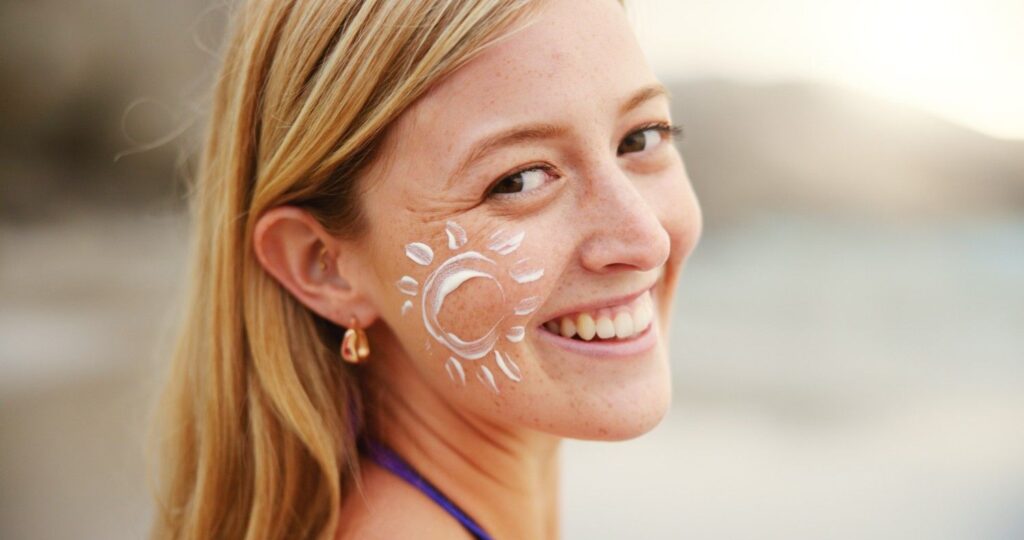
Key Takeaways
- Up to 80% of visible skin ageing is caused by UV exposure — not genetics. This is called photoageing.
- Qatar’s high UV index accelerates photoageing significantly compared to milder climates.
- Collagen and elastin fibres in the skin are broken down by UV radiation, leading to wrinkles and sagging.
- Sunspots (solar lentigines) and uneven skin tone are direct signs of cumulative UV damage.
- Prevention is far more effective than treatment — starting protective habits early and maintaining them is the most powerful approach.
- A dermatologist can assess UV-related skin damage and recommend personalised protective and restorative options.
Understanding Photoageing
There are two types of skin ageing. The first is intrinsic ageing — driven by genetics and the natural passage of time. The second, and far more impactful in terms of visible change, is extrinsic ageing or photoageing — caused almost entirely by UV radiation from the sun.
Photoageing works through multiple pathways. UVA rays penetrate deep into the dermis and directly damage the collagen and elastin fibres that give skin its structure and firmness. Over time, as these fibres break down without adequate repair, skin begins to sag, wrinkle, and lose its natural plumpness. UVB rays, meanwhile, damage the outer skin layers and create cumulative DNA changes that alter how skin cells replicate — contributing to the rough texture, brown spots, and irregular pigmentation associated with photo-damaged skin.
In Qatar, where UV radiation is intense even in the “cooler” winter months, photoageing accumulates rapidly. Most of a person’s lifetime sun exposure — and therefore most of their photoageing — is acquired before the age of 25. But meaningful damage and visible change continue to accumulate with every unprotected hour spent outdoors, at any age.
Common Causes of Premature Skin Ageing in Qatar
- Daily unprotected sun exposure during outdoor activity, commuting, and exercise
- Not using sunscreen consistently or in adequate amounts (most people apply only 25-50% of the recommended quantity)
- Spending time near reflective surfaces — water, sand, and light-coloured buildings amplify UV radiation
- Driving without UV-protective window film (standard car windows do not block UVA)
- Outdoor sports and activities during high UV hours
- Dehydration — chronically dehydrated skin heals more slowly and shows ageing changes earlier
Signs and Symptoms of Photoageing
Early signs:
- Fine lines around the eyes and mouth appearing earlier than expected
- Subtle unevenness in skin tone
- Slight dullness or loss of glow
- Mild roughness in skin texture
More advanced signs:
- Deep wrinkles, particularly on the face, neck, chest, and hands
- Brown sunspots or patches of darker pigmentation
- Leathery, thickened skin texture
- Visible sagging or loss of facial volume
- Broken capillaries (small red or purple veins visible on the skin surface)
- Yellowish or greyish discolouration of the skin
Book your appointment
Limited slots available this month — Reserve yours now
Book your dermatology appointment at American Hospital Clinics Doha today for expert skin care.
Who Is Most at Risk in Qatar?
- Fair-skinned individuals with naturally lower melanin levels
- People who spend significant daily time outdoors — for work, sport, or lifestyle
- Those who have never established a daily sunscreen habit
- Adults over 30 with years of unprotected sun exposure accumulated in Qatar or other sunny climates
- People who are chronically dehydrated, as hydration directly supports skin cell health
Why It Matters in Qatar’s Climate
Qatar’s UV index is extreme during summer and remains high throughout the year. The intensity of UV radiation in Doha means that skin ageing damage accumulates much faster than in a country with mild summers. A person who lives in Qatar for 10 or 20 years without adequate sun protection will typically show significantly more photoageing than a counterpart with comparable genetics living in a less sunny environment.
Prevention Tips
- Apply SPF 50 broad-spectrum sunscreen every morning — before you leave the house, including on cloudy days.
- Reapply sunscreen every two hours when outdoors, and after swimming or perspiring.
- Wear sun-protective clothing — lightweight long-sleeved tops, wide-brimmed hats, and UV-blocking sunglasses.
- Seek shade between 10am and 4pm, when UV radiation is most intense.
- Install UV-protective window film in your car if you drive significant daily distances.
- Ensure adequate daily water intake — well-hydrated skin is more resilient and repairs more effectively.
Skin Care Habits That Support Prevention
In addition to sunscreen, an evidence-based daily skin care routine supports skin health in Qatar’s climate:
- Use a gentle, fragrance-free cleanser to avoid stripping the skin’s natural protective barrier.
- Include a vitamin C serum in your morning routine — vitamin C is a powerful antioxidant that neutralises free radicals caused by UV exposure and helps maintain collagen levels.
- Use a moisturiser containing hyaluronic acid or glycerin to maintain skin hydration in Qatar’s dry, air-conditioned environment.
- Retinoids (vitamin A derivatives) used in the evening can help support collagen production and reduce the visible signs of existing photoageing — ask your dermatologist about appropriate options.
When Should You Seek Medical Advice?
Consult a dermatologist if:
- You are concerned about visible changes in your skin’s appearance, texture, or tone
- You have noticed new spots, rough patches, or changes to existing moles
- You want a professional assessment of UV-related skin damage and personalised advice
- You are interested in evidence-based treatments for photoageing
How the Dermatology Department at American Hospital Clinics Doha Can Help
The Dermatology Department at American Hospital Clinics Doha offers specialist assessment of UV-related skin ageing, personalised skin health planning, and a range of evidence-based treatment options for photoageing and related concerns. The team can assess the extent of sun-related skin damage, identify any precancerous or concerning lesions, recommend appropriate topical treatments and lifestyle changes, and discuss clinical options available to address existing photoageing. All care is delivered in a patient-centred environment, with clear explanations and practical advice relevant to life in Qatar.
Myth vs Fact
Myth: Sunscreen every day is excessive — just use it at the beach.
Fact: In Qatar’s climate, daily sunscreen use is a medical necessity, not a luxury. Cumulative daily UV exposure from commuting, outdoor errands, and exercise adds up to more lifetime damage than occasional beach trips.
Myth: A tan makes skin look healthier and younger.
Fact: A tan is proof of UV-induced DNA damage. The cosmetic appearance may temporarily seem more even, but the biological consequence is accelerated ageing and increased cancer risk.
Myth: Skin ageing is inevitable — there is nothing you can do.
Fact: While intrinsic ageing is inevitable, up to 80% of visible skin ageing is attributable to UV exposure — and is therefore largely preventable. Consistent sun protection genuinely makes a measurable difference over time.
Myth: Only women need to worry about skin ageing from sun exposure.
Fact: Men accumulate equal amounts of UV-related skin damage. In fact, men are statistically less likely to use sunscreen consistently, which means they often show more advanced photoageing.
Myth: If I cannot see any sun damage yet, I do not need to start protecting my skin.
Fact: UV damage begins accumulating from your very first unprotected sun exposure. Visible changes lag years behind the underlying biological damage. Starting protection now — at any age — reduces future consequences.
What Our Patients Say
— Noura
Frequently Asked Questions
Can photoageing be reversed?
At what age should I start protecting my skin from UV-related ageing?
Does sunscreen prevent wrinkles?
What is the best sunscreen for daily use in Qatar?
How does dehydration affect skin ageing?
Conclusion
Photoageing is not fate—it is a largely preventable consequence of unprotected UV exposure. In Qatar’s high UV environment, the difference between maintaining a consistent sun protection routine and having no protection at all becomes visible over the years.
Start today. Use SPF 50 daily, protect yourself when outdoors, stay hydrated, and consult the dermatology specialists at American Hospital Clinics Doha for expert guidance on protecting your skin and maintaining a healthy, youthful appearance.
Book your dermatology appointment
Healthy skin starts with expert care.
C Ring Road,Al Muntazah St Near Al Andalus Petrol Station, Doha, Qatar